

I’ll be honest: I’ve always found insurance tricky.
Before flying out of Haneda Airport a few years ago, I bought travel insurance. When I lost my prescription medication during the trip, I contacted the insurer to ask whether replacement costs were covered.
Their answer? “The travel insurance plan only covers medical expenses for new illnesses originating during the trip.” Losing my regular medication didn't qualify.
When buying a home in Japan, many homeowners take out fire insurance, often alongside earthquake and contents coverage. But the way these policies work can differ from what you’re used to in the U.S.
Understanding these differences can help you make more informed decisions about your coverage, identify potential gaps, and manage your risks more effectively.
Quick summary
Know your limits: Japanese earthquake insurance covers only 30%–50% of your fire insurance amount, subject to statutory caps.
Check your building valuation: Insured amounts are based on rebuilding costs, not your home's market price. Condo owners should check the management rules.
Review every rider: Compare coverage, exclusions, and optional add-ons before signing.
Keep the tax postcard: Your earthquake and eligible life insurance premium deduction certificate may be needed for year-end adjustment or your tax return.
Table of contents
1. Five Big Differences I Want You to Be Aware Of
2. How Coverage Limits Work: 3 Traps
3. Choosing a Home Insurance Provider: Online or Through an Agent?
4. Tax Deductions & Paperwork: Don't Throw Away the Postcard!
5. Wrap-Up

1. Five Big Differences I Want You to Be Aware Of
Japan’s regulatory framework, disaster management approach, and liability culture create very different rules.
Here is a side-by-side breakdown of the five key structural differences.
| Feature / Area | United States Home Insurance | Japan Fire/Earthquake/Contents | Key Expat Takeaway |
|---|---|---|---|
| Policy Duration | 1 Year: Renewed annually with potential yearly rate increases. | 5 Years: Long-term fixed policies (previously 10 years) that lock in rates. | Pay upfront or set up multi-year billing to lock in rates for 5 years at a time. |
| Earthquake & Disaster | Standalone / High Deductible: Separate, costly policies for flood, fire, or seismic risk. | Government Rider: Earthquake coverage is attached to Fire Insurance; capped at 30%–50% of home value. | Earthquake insurance is designed for recovery buffer capital, not 100% structural rebuilding. |
| Payout & Appraisal | Replacement Cost / Scheduled: Requires itemized schedules & receipts for high-value items. | Fixed JPY Cap: Blanket limit (e.g., JPY 5M); claims pay out by assessed damage percentage. | No need to catalog every expensive item; choose a blanket coverage band that fits your household scale. |
| Claim Penalties | Claims may lead to higher premiums or nonrenewal, depending on the insurer, state, and claim history. | Unlike auto insurance, fire insurance has no claims-based rating system, so claims generally don’t affect renewal premiums. | If the building or contents are a total loss and the full insured amount is paid, the policy ends. |
| Personal Liability | Usually included in standard homeowners and renters policies. | Often an optional rider. | Check whether you have it through any existing policy such as mandatory Car Insurance. |
| Tax Deductions | Homeowners insurance premiums generally are not deductible. | Earthquake (and life insurance) premiums qualify for Japanese income tax deductions. | Keep the insurer’s premium deduction certificate (usually mailed in October/November) for year-end tax adjustment or your tax return. |
2. How Coverage Limits Work: 3 Traps
In Japan, you cannot arbitrarily pick an insurance amount based on your home's market purchase price.
Insurers separate land value entirely and use standardized formulas to set a strict coverage range (e.g., JPY 20M to JPY 30M).
Here are three hidden pitfalls that can lead to direct financial loss if you don't check them:
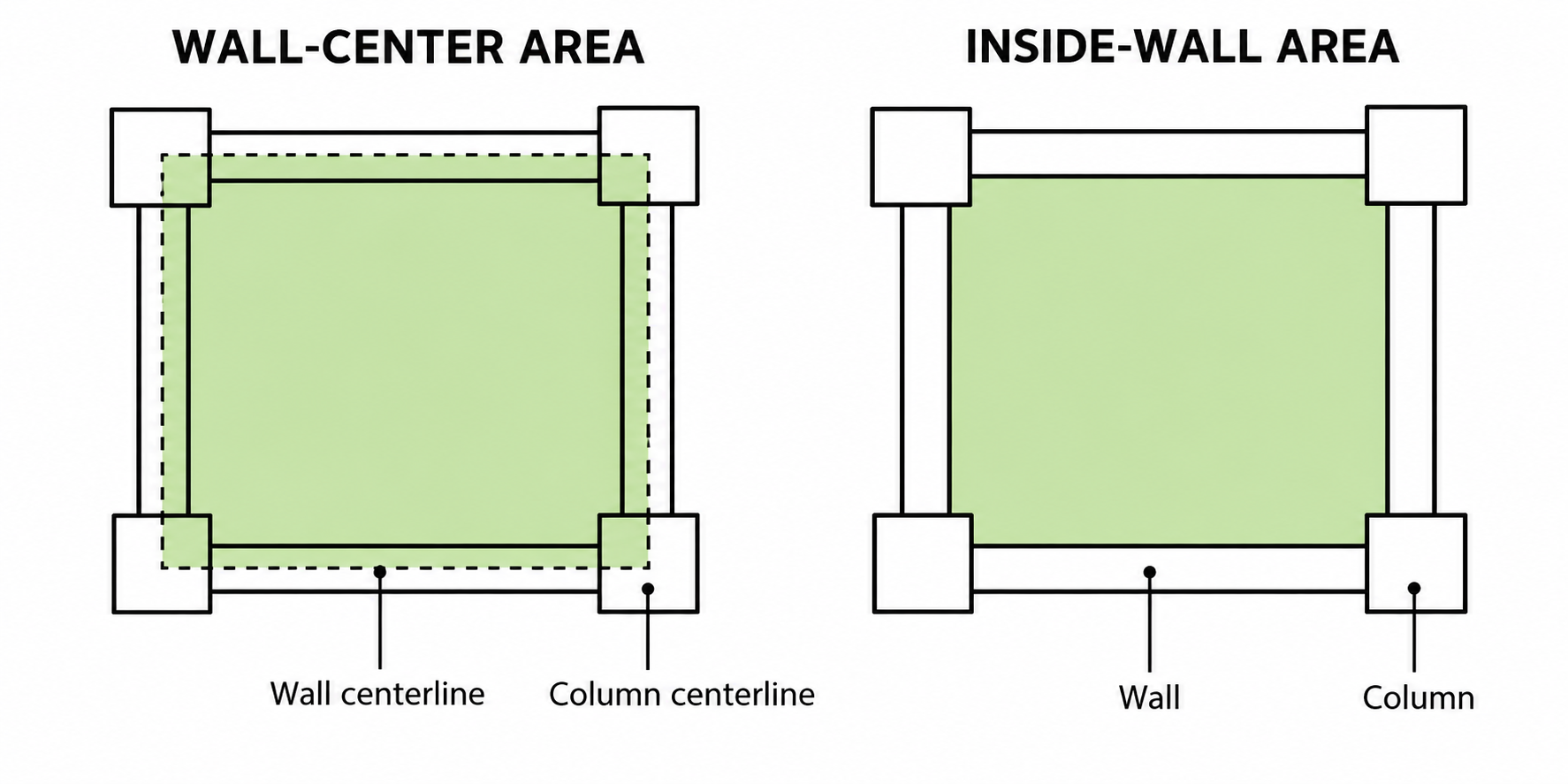
Trap 1: Apartment Area Double-Payment (Kabeshin vs. Uranuri)
The Risk: In an apartment (condo), your HOA declaration (Kanri Kiyaku) defines where your unit ends and common space begins.
If your policy is written using the larger wall-center area (Kabeshin) instead of internal wall area (Uranuri), you end up double-paying premiums for structure already insured by your HOA.
Worse, under-declaring area leaves you under-insured, cutting your payout during a major claim.
Action to Take: Check your apartment's Kanri Kiyaku (or ask your agent) for the exact measurement standard before signing your individual Fire Insurance policy.
Trap 2: Assuming Earthquake Insurance Will Rebuild Your Home
The risk: Japanese earthquake insurance is purchased together with fire insurance, not as a standalone policy.
Its insured amount is limited to 30%–50% of the fire insurance amount, subject to statutory maximums of JPY 50 million for a building and JPY 10 million for household contents.
These limits mean earthquake insurance may not provide enough money to rebuild your home completely.
The payout also depends on the officially assessed damage category. It is not simply a reimbursement of every repair bill.
What to do: Decide in advance what you would need the payout to cover. Think about temporary accommodation, essential purchases, repairs, and other recovery expenses—and consider how you would fund any rebuilding costs beyond the insurance payout.
Trap 3: Paying for Riders You Don't Need
The risk: An insurance quote may include optional riders for personal liability, legal expenses, patio repairs, or other types of protection.
Some may be useful; others may overlap with coverage you already have through another policy. Accepting a package without reviewing the details can mean paying for protection you do not need.
What to do: Review every rider on the quote. Ask what it covers, what it costs, whether you already have similar coverage elsewhere, and whether you can add or remove it later.
Do not assume changes are always permitted during the policy term; check the insurer's conditions first.
The bottom line: Before signing, confirm three things: the insured amount is appropriate, you understand the limits of earthquake coverage, and every optional rider has a clear purpose.
3. Choosing a Home Insurance Provider: Online or Through an Agent?
Choosing home insurance in Japan was no small feat. I wanted to compare not only premiums, but also coverage and the support available if we ever needed to make a claim.
| Option | Potential Advantages | Trade-Offs |
|---|---|---|
| Direct / Online Insurers | Often lower premiums; convenient online management. | Support options and English-language assistance vary. |
| Traditional Insurers / Agents | Dedicated local field adjusters, extensive agency networks, and on-the-ground disaster response. | May cost more; guidance can take time. |
Our Experience: Getting a Second Opinion
When we moved, I assumed we could simply transfer our existing fire, earthquake, and contents insurance to our new home, since we were staying in the same apartment building. Instead, we had to cancel the old policy and arrange new coverage.
Our real estate broker obtained a quote through a partner agent, but I wanted to compare the details myself. We visited a multi-brand insurance counter (Hoken no Madoguchi), where the staff explained the options clearly and helped us compare quotes from major insurers with the online options I had found.
The comparison helped us review the coverage and remove unnecessary or duplicate riders. I was glad we took the time to look beyond the first quote.
4. Tax Deductions & Paperwork: Don't Throw Away the Postcard!
Earthquake and eligible life insurance premiums qualify for Japanese income tax deductions.
Watch for the annual premium deduction certificate (hokenryo kojo shomeisho), often mailed by your insurer in October or November. You’ll need it to claim the deduction.
Year-End Tax Adjustment (Nenmatsu Chosei)
If you are an employee, submit the certificate to your employer’s HR or payroll department.
Tax Return (Kakutei Shinkoku)
If you file a tax return—for example, because your employment income exceeds JPY 20 million—you can claim eligible deductions there.
If you lose the certificate, contact your insurer to request a replacement.
5.Wrap-Up
My husband prefers comprehensive coverage. I tend to be more skeptical—perhaps because I still find insurance difficult to understand.
When we lived in the suburbs of Chicago, our home was burglarized. We had insurance, but some of our valuables weren't listed, so they weren't covered.
Having insurance isn't the same as having the coverage you need. I still need to read the fine print—especially what isn't covered.
Related articles
Property Titles in Japan: How Cross-Border Couples Can Avoid 2026 Tax & Inheritance Risks
You Saved in USD for Decades. What Happens When You Convert It to JPY in Japan?
Aki | Japanese | Former Head of HR in Global Finance
I believe building a long-term life in Japan requires seeing the bigger picture.
By understanding how visa, healthcare, taxes, retirement, senior care, inheritance, and family decisions fit together, you can make informed decisions and take calculated risks.
