

In Japan, the government centrally tracks much of your personal data through address registrations, family registries (koseki), and the My Number system.
The United States works differently—and living abroad does not make your U.S.paper trail irrelevant. Decades later, you may still need those records for Social Security, cross-border taxes, banking, or estate matters.
This guide is not about hoarding every piece of paper. It is about knowing which U.S. records matter, why you will need them in Japan, and how to keep them accessible.
Quick Summary
Table of Contents
1. U.S. Employment, Tax and Social Security Records
2. Personal and Family Documents: Difficult to Replace from Overseas
3. Driver's License, Passports, and Other Key U.S. Records
4. Updating Your U.S. Addresses When Moving to Japan
5. Organizing Your Records: A Practical Approach
6. Q&A
7. Wrap Up
1. U.S. Employment, Tax and Social Security Records
Documents to retain:
W-2 forms showing individual employment earnings.
Historical Form 1040 tax returns, including joint returns and supporting schedules.·
Social Security Statements (earnings history): Your year-by-year U.S. taxed earnings record and benefit estimates·
Annual Social Security Benefit Statements (Form SSA-1099 or SSA-1042S): Issued each tax season showing total benefits paid for the year.·
Employment and retirement plan records (401(k), pension, IRA).
Why they matter:
Social Security eligibility: Verifying your U.S. working history and credits—or coordinating U.S.–Japan benefits.
Joint-account and estate documentation: Reconstructing each spouse's individual earnings from joint returns to prove contribution ratios for Japanese inheritance tax or the Overseas Asset Report (Kokugai Zaisan Chosho).
Cross-border tax compliance: Supporting annual U.S.–Japan tax filings (including reporting Social Security benefits on your Japanese Tax Return) and estate planning.
Foreign exchange calculations: Establishing historical USD acquisition dates and cost basis when converting USD savings into JPY in Japan. (See the article below for detail)
Related article
You Saved in USD for Decades. What Happens When You Convert It to JPY in Japan?
Note on online accounts: 401(k), brokerage providers, and the Social Security Administration (my Social Security at ssa.gov) offer online access to earnings histories and past statements, though retention windows and overseas login rules vary.
Check your Social Security earnings record periodically for accuracy, verify how far back financial providers store statements, and download key records rather than relying indefinitely on portal access.
Real Story
A Japanese friend of mine worked in the United States for more than a decade before returning to Japan. Years later, when she applied for U.S. Social Security benefits through the U.S. Embassy in Tokyo, she was asked to verify her first U.S. employment.
Because she had kept her very first W-2 form—showing her Social Security number, employer identification number, and wages—she was able to confirm her work history smoothly.
2. Personal and Family Documents: Difficult to Replace from Overseas
Vital family records are especially critical for international households, as U.S. life events are not automatically recorded in Japan's family registry system.
Documents to retain:
Marriage certificate
Birth certificates for yourself and your children
Divorce decrees, if applicable
Death certificate of a deceased spouse
Legal name-change documents, where applicable
Why they matter:
Survivor and spousal benefits: Claiming U.S. Social Security or pension survivor benefits
Estate administration: Proving legal standing during inheritance and probate procedures
Immigration and citizenship: Supporting visa renewals, or permanent residency filling
Establishing lineage: Verifying family relationships across two legal systems
Financial and insurance claims: Processing life insurance payouts and beneficiary transfers
Practical tip on copies and apostilles: Keep easily accessible copies of these records, and note which U.S. state or county office holds the originals in case you need to order certified replacements.
When submitting U.S. vital records to Japanese courts, government offices, or Japanese banks (such as during inheritance and account-release procedures), you will generally need certified paper copies along with a Japanese translation—and depending on the institution and purpose, an apostille or other official authentication.
Real Story
Under U.S. Social Security rules, a divorced spouse who has not remarried may still qualify for benefits based on an ex-spouse's work record (provided the marriage lasted at least 10 years).
When the same Japanese friend mentioned earlier applied for benefits, the Social Security Administration asked for her ex-husband's identifying details and last known address—to locate his record and verify her eligibility.
3. Driver's License, Passports, and Other Key U.S. Records
Certain U.S. credentials carry strict expiration dates—and letting them lapse while living in Japan can create costly administrative hurdles.
U.S. Driver's License:
Japanese license conversion (gaimen kirikae): To convert a U.S. license to a Japanese one, Japan requires proof that you resided in the issuing state for at least three months after the license was issued, and the license must still be valid at the time of application.
Consequences of expiration: If your U.S. license expires before you convert it, you generally lose eligibility for the simplified conversion process and may have to start from scratch at a Japanese driving school.
Related article
Other expiring U.S. credentials to monitor:
U.S. Passport: Keep track of expiration dates well in advance, as renewals from Japan take several weeks and a valid passport is required for Japanese immigration procedures and international travel.
U.S. Permanent Resident Card (Green Card), if applicable: Monitor expiration dates and rules regarding extended absences from the United States.
U.S. Estate, Contract, and Medical Records to Retain:
U.S. Will and Trust documents: Keep copies of any Will, revocable living trust, or durable power of attorney drafted in the U.S. Note that a U.S. Will can unintentionally conflict with—or revoke—a Japanese Will if not coordinated carefully, so your family and legal advisors need to see both.
POLST and Advance Healthcare Directives: If you completed a POLST (Physician Orders for Life-Sustaining Treatment) or Living Will in the U.S., keep it on file—especially if you return to the U.S. for medical care or extended visits.
Keep in mind that U.S. POLST forms and advance directives are not legally binding on emergency responders or hospitals in Japan, so they should be paired with clear family discussions and Japan-specific medical planning.
Related article
Do Not Resuscitate (DNR) in Japan: When Your U.S. Wishes Cross Borders
U.S. real estate and financial contracts: Property deeds, mortgage payoff records, and promissory notes.
Insurance policies: Active U.S. life insurance, long-term care, or annuity contracts—along with up-to-date beneficiary designations.
Medical and immunization records: Vaccination histories, surgical summaries, and chronic condition records that may be needed by Japanese doctors or international insurers.
4. Updating Your U.S. Addresses When Moving to Japan
Moving from the United States to Japan highlights a fundamental administrative difference between the two countries:Japan’s systems are centrally linked, while U.S. institutions operate independently.
Once you register your Japanese address at your local city hall, your Residence Card, My Number Card, National Health Insurance, and National Pension (if any) records are all connected.
None of that information, however, reaches the United States.Updating your U.S. agencies and financial institutions requires deliberate planning—ideally before you leave the U.S.
U.S. agencies and institutions to update:
Social Security Administration (SSA): Report your address in Japan through the Federal Benefits Unit (FBU) at the U.S. Embassy in Tokyo.
IRS: File a change of address if you expect correspondence or are not filing your next Form 1040 immediately.
U.S. insurance providers: Life insurance, annuities, and long-term care policies.
U.S. banks, credit cards, 401(k)s, and brokerages: Review how each institution handles overseas residency versus a U.S. mailing address (see below).
Critical Note: The U.S. Physical Address Requirement (No P.O. Boxes)
Many U.S. banks, credit card issuers, and brokerage firms require a U.S. residential address to keep an account open or maintain full trading privileges.
Under federal anti-money-laundering and customer-identification rules, institutions must verify a physical street address—meaning a P.O. box or commercial mail-forwarding service generally cannot be used as your primary residential address (even if allowed as a secondary mailing address).
Because of this rule, many expats arrange to keep a trusted U.S. family member’s physical address on file for brokerages,401(k) plans, or credit cards before leaving the country.
Before leaving the U.S.: Confirm each institution’s policy on foreign residency and establish a reliable U.S.residential address if required so your accounts are not unexpectedly restricted or frozen.
After settling in Japan: Keep track of that U.S. address—if your family member moves, you will need to update your financial institutions promptly, even if your own address in Japan has not changed.
5. Organizing Your Records: A Practical Approach
Your records also need to be organized so you or your family can find them under pressure.
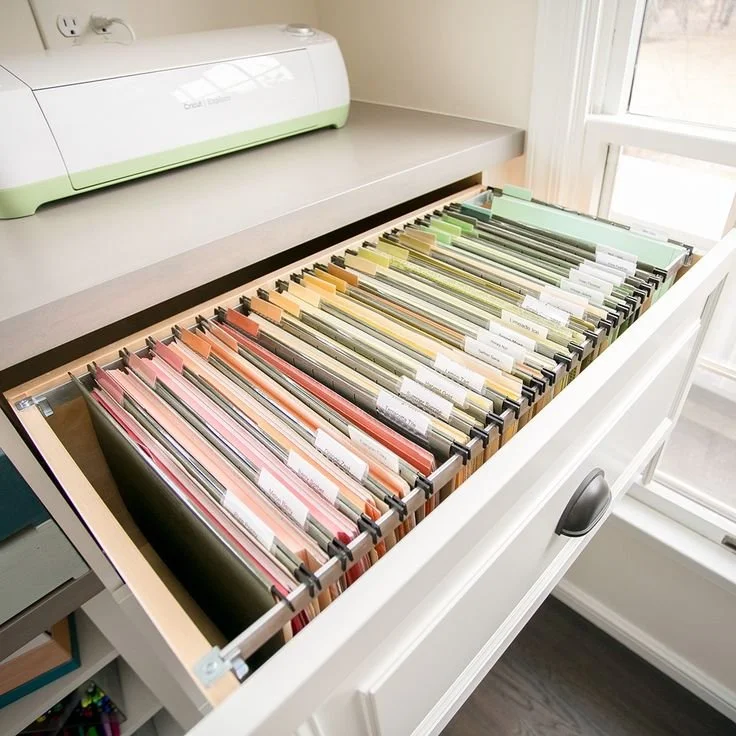
Separate by country and category: Keep U.S. and Japanese records distinct, grouped into vital records,tax/employment, financial/retirement, and estate/medical files.
Pair physical security with digital backups: Store original civil-status and legal documents in a secure location,and maintain encrypted digital copies for quick reference.
Download statements periodically: Save historical financial, tax, and retirement PDFs rather than relying solely on online portals.
Create a master index for your spouse: Maintain a simple inventory listing what documents exist, where the originals are stored, and how to access key accounts—and make sure your spouse or executor knows where to find it.
Note: Tax and financial retention periods depend on applicable U.S. and Japanese laws and your personal circumstances, so avoid relying on a single universal timeline.

6.Q&A
Q1. What happens if I lose access to my U.S. phone number for two-factor authentication?
A1. Many U.S. banks, brokerages, and government portals rely on SMS two-factor authentication, which can lock you out of your accounts once you cancel your U.S. mobile plan after moving to Japan.
To avoid getting locked out, consider keeping a low-cost U.S. mobile plan active for SMS codes (for example, we have kept a U.S. number through Mint Mobile).
Q2. Can I replace a lost U.S. birth or marriage certificate through the U.S. Embassy in Tokyo?
A2.No. The U.S. Embassy and consulates in Japan do not store or reissue state-issued vital records such as birth, marriage, or divorce certificates.
To obtain a certified replacement, you must apply directly to the vital records office in the U.S. state or county where the event took place.
7. Wrap-Up: Your Records Are Part of Your Cross-Border Planning
Without practical guidance, it is nearly impossible to anticipate every document you will need for cross-border living, retirement, or end-of-life planning.
I personally wish I’d had a list like this years ago.
Few people ever expect they might need their very first W-2 decades later.
While U.S. citizens can verify much of their earnings history through the Social Security Administration website, non-citizens, complex joint filings, or cross-border tax questions often require the underlying paper trail.
Do not wait until a crisis or deadline to discover that a critical document is missing.
Aki | Japanese | Former HR professional in Global Finance
I believe building a long-term life in Japan requires seeing the bigger picture. By understanding how visa, healthcare, taxes, retirement, senior care, inheritance, and family decisions fit together, you can make informed decisions and take calculated risks!
