

Navigating Serious Illness in Japan: U.S. Expectations vs. Japanese Reality
You're Going Home Already?
When my family member had heart surgery in the U.S., he was discharged from the hospital after only three days.
I was shocked.
His incision was still fresh, and I remember thinking, “He's really going home already?”
The hospital was Advocate Condell Medical Center in Vernon Hills, Illinois, and the experience was very different from what I was used to seeing in Japan.
That experience made me look at hospitals differently.
How different is the experience of being a hospital patient in Japan and in the U.S.?
Quick Summary
Hospital stay: Japan may involve a longer hospital stay, with more recovery taking place in the hospital.
Room: Shared rooms are common; private rooms may involve an additional charge.
Choosing a hospital: Before major cancer or heart treatment, research the hospital and ask about its experience with your condition.
After discharge: Plan ahead for rehabilitation, home care, and Long-Term Care Insurance if needed.
Table of Contents
1. Who Is on Your Care Team?
2. How Long Do You Stay?
3. What Kind of Room Will You Get?
4. How Do You Choose a Hospital?
5. Going Home: What Happens Next?
6. And Then There Is the Money
7. Q&A
8. Wrap Up
1. Who Is on Your Care Team?
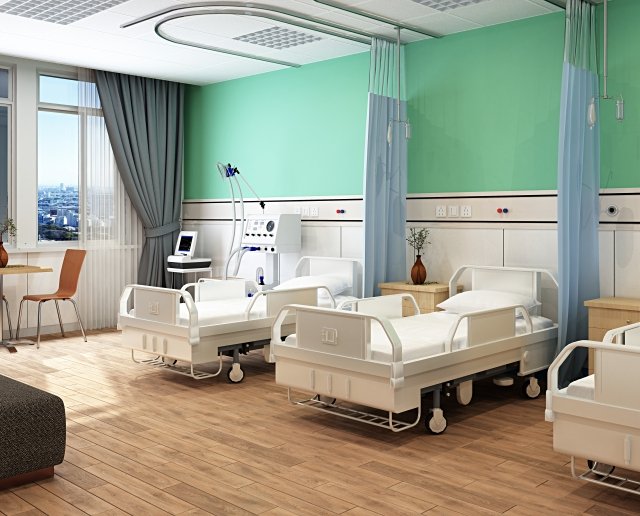
One thing that impressed me during my family member's ICU stay was the nursing care.
At one point, a nurse was closely monitoring his heart condition. His nurse-to-patient ratio was 1-to-1, although this can vary depending on the patient's condition and hospital staffing.
In Japan, ICU nursing is generally organized around a 1 nurse to 2 patients framework, with more intensive staffing available when necessary.
But the number of nurses is only part of the picture.
Who Is Actually on Your Care Team?
Depending on your situation, you may have access to different professionals for different needs:
Doctor — Diagnosis, treatment and medical decisions
Nurse — Day-to-day care, monitoring and nursing support
Pharmacist — Medications side effect and how to take them
Registered dietitian — Nutrition and diet
Medical social worker — Treatment costs, work, daily life and transfer to another hospital
Psychologist — Psychological support related to diagnosis and coping with illness
Cancer Consultation and Support Center (がん相談支援センター) — Free, confidential consultation on cancer-related concerns
Chaplain — Spiritual and emotional care. Not common in Japanese hospitals, but available at some hospitals, such as St. Luke’s International Hospital and Kinugasa Hospital/Yokosuka.
2. How Long Do You Stay?
In Japan, hospitalization can be considerably longer after major surgery.
As a general guide, open-heart surgery, such as bypass or valve surgery, may involve roughly 2 to 3weeks in the hospital, while catheter-based procedures and some minimally invasive surgeries may involve only several days to about a week.
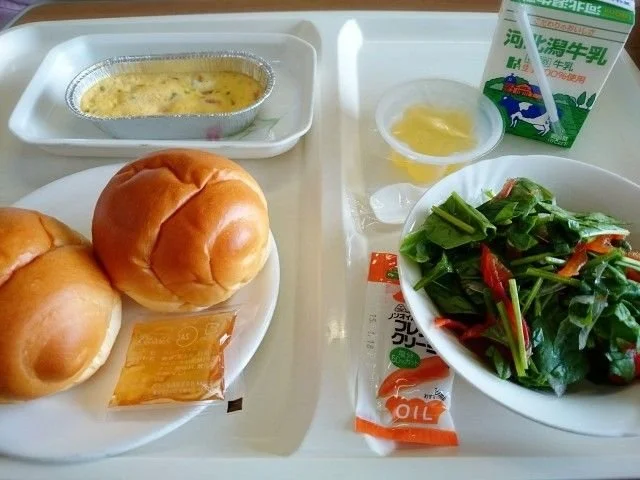
Hospital meals in Japan are generally served at set meal times, with menus adjusted when medical or nutritional requirements call for it.
And you can't simply order delivery from outside the hospital because you feel like having something different.
Meals are part of the structured hospital routine.
In the U.S., to my surprise, depending on the hospital, patients may have more choice from a menu and may order meals through a room-service-style system.
I remember looking at the menu and seeing double cheeseburgers and pizza—unless you had a dietary restriction.
3. What Kind of Room Will You Get?
In Japan, the room you receive can depend on availability, your medical condition, and your preference.
A shared room, often with 4 or 6 beds, is common. If there is no shared room vacancy—or if your condition requires closer monitoring—you may be placed in a private room.
If you prefer privacy, you can request a private room, if one is available. But a private room typically comes with an additional daily charge that is not covered by ordinary public health insurance.
So when you are admitted to a Japanese hospital, it is worth asking:
“What type of room will I be staying in, and is there an additional charge if I want a private room?”
4. How Do You Choose a Hospital?
If you are told that you need major cancer or heart surgery, “Which hospital should I go to?” is a very different question from “Which hospital is closest to me?”
Japan actually publishes a surprising amount of information about hospitals. The challenge is knowing where to find it and what to look for.
For Cancer
MHLW's designated Cancer Care Hospitals give patients a useful starting point.
The published information includes cancer registrations, surgery, drug therapy, radiation, palliative care and cancer consultation services.
These hospitals provide specialized cancer care, regional coordination, and consultation and information services for patients and families.
As of April 2026, 468 hospitals were designated.
The published information can help you see, for example:
Number of registered cancer cases
Cancer surgery volume
Number of patients receiving drug therapy
Radiation therapy
Palliative care
Cancer consultation and support services
This information is in Japanese, but that does not make it useless to a foreign resident. It can provide a starting point for identifying which hospitals in your area play a major role in cancer care.
Note: You may notice that National Cancer Center Hospital and National Cancer Center Hospital East are not on this list. The National Cancer Center Japan is the country's national center for cancer control, with hospitals in Tokyo and Chiba.
National Cancer Center Japan — Tokyo
National Cancer Center Hospital East — Chiba
For Heart Disease
For cardiovascular care, the MHLW's DPC public data provide another useful source. The data include hospital-level statistics for cardiovascular diseases (MDC05), as well as disease- and surgery-specific data.
The information is not presented as a simple hospital ranking. But it can help you investigate how much cardiovascular care individual hospitals provide
Look Beyond the Hospital Name
Before making an important decision, it is worth finding out:
How much experience does the hospital have with your condition or procedure?
Who will actually be involved in your care?
What specialists and support services are available?
What happens if complications occur?
Can you get a second opinion?
5. Going Home: What Happens Next?
After a major illness or surgery, you may need help with daily activities, rehabilitation, nursing care or medical care at home.
As for longer-term support at home, another system may become important: Japan's statutory Long-Term Care Insurance.
Who Can Use Long-Term Care Insurance?
Foreign residents who are covered by Japan's Long-Term Care Insurance system can use its services when they meet the eligibility requirements. In general:
Age 65 or older — if you are certified as needing care or support
Age 40–64 — if you are enrolled in medical insurance and need care because of one of Japan's 16 specified diseases, which include conditions such as early-onset dementia and terminal cancer
Foreign residents who are legally residing in Japan for more than 3 months and are registered as residents are generally covered by the system, subject to the applicable rules.
When Should You Apply?
This is where timing matters.
To use Long-Term Care Insurance services, you need to apply to local Community General Support Center (地域包括支援センター) .
The process includes an assessment of your physical condition and an opinion from your attending doctor.
If you may need services after discharge, don't wait until you are already home to start asking about the process.
Depending on your certification level, services may include home-visit nursing, home-help services, rehabilitation, equipment rental and other forms of support.
Related article
In-Home Care in Japan: From Critical Illness to Senior Support
6. And Then There Is the Money
Of course, we cannot talk about being a hospital patient without talking about money.
Here are some examples of the estimated patient share for major medical procedures in Japan, based on estimates published by major hospitals for patients under 70 with 30% insurance cost-sharing.
These are not national average costs.
Cancer surgery — Patient share
| Procedure | Estimated 30% patient share |
|---|---|
| Lung cancer — lobectomy | JPY 508K |
| Colon cancer — open surgery | JPY 315K |
| Rectal cancer — robot-assisted surgery | JPY 1.76M |
Source: National Cancer Center Hospital, Tokyo
The hospital specifically notes that these figures do not include meals, private-room charges, pajamas and other such expenses.
Heart surgery — Patient share
| Procedure | Estimated 30% patient share |
|---|---|
| Coronary artery/aortic bypass surgery (CABG) | JPY 1.20–1.50M |
| Valve replacement — one valve | JPY 1.40–1.70M |
| Thoracic aortic aneurysm — stent graft | JPY 1.00–1.50M |
Source: New Tokyo Hospital, Tokyo
The estimates include hospitalization and meals.
But the amount you actually pay can be lower.
Japan's High-Cost Medical Expense System (高額療養費制度) puts a monthly ceiling on the amount a patient pays for covered medical treatment.
The ceiling depends on factors such as age and income.
Expenses such as private-room charges, hospital meals and other non-covered costs remain outside the system.
Related article to understand Health Insurance in Japan:

7.Q&A
Q1. What should I ask if I am admitted to a Japanese hospital?
A1.At minimum:
How long do you expect me to stay?
What will happen after discharge?
Can I choose a private room?
Is there an additional room charge?
What is included in the hospital stay?
Who can explain the costs?
Will I need help at home after discharge?
When can my family visit me?
Q2. Can I see the cost before treatment in Japan?
A2. In many cases, you may not know the exact amount until after your examination or treatment, when the hospital calculates the bill.
Some hospitals may also have limited cashless payment options, so credit cards or QR-code payments may not always be available.
If the cost is a concern, it is worth asking the hospital about the estimated cost and available payment methods beforehand.
Q3. What if I don't have health insurance in Japan?
A3. Medical costs can become very expensive if you have to pay the full amount yourself. If you are not covered by Japanese health insurance, ask the hospital about the estimated cost before receiving treatment and how payment will be handled.
8.Wrap Up
At hospitals in the U.S., including Condell Medical Center, I heard the birth chimes for the first time in my life. Hearing them reminded me that a hospital can be a place of both difficult moments and new beginnings.
Hospitals in Japan and the U.S. can feel very different—from the length of your stay and the members of your care team to what happens after you go home.
When you or a family member faces a serious illness, I hope this article helps you understand the differences, ask the right questions, and make informed decisions about your care.
Aki | Japanese | Former Head of HR in Global Finance
I believe building a long-term life in Japan requires seeing the bigger picture. By understanding how visa, healthcare, taxes, retirement, senior care, inheritance, and family decisions fit together, you can make informed decisions and take calculated risks.
