

Japan Cost of Living Blueprint 2026
(Original post April 1,2025, Updated February 10,2026)
Real Monthly Budgets for Singles, Couples, and Families
This revised guide is for people planning to live and work in Japan who want a clear picture of everyday living costs once they have settled here.
This guide summarizes typical monthly budgets for singles, couples, and families so you can plan your life in Japan with clearer financial expectations. Costs vary by lifestyle and location, so use these figures as planning estimates.
This blog covers:
1. How to Read This Guide
2. Monthly Living Cost: Single Professional
3. Monthly Living Cost: Couple
4. Monthly Living Cost: Family of Four
5. How Living Costs Translate to Salary in Japan
6. Tokyo Central vs Suburban Living
7. Optional Extras
8. Common Budgeting Mistakes
9. Q&A
10. Wrap Up

1.How to Read This Guide
Before looking at the numbers, here are the assumptions behind this guide.
Budgets are shown in net income. All figures represent the monthly income needed after taxes and social insurance deductions.
Tokyo suburban living is the baseline. Costs assume living in Tokyo suburban or commuter areas where many working residents actually live. Central Tokyo can easily cost 20–40% more, while regional cities may cost less.
Three lifestyle levels are used.
o Frugal: careful budgeting, smaller housing, limited dining and travel.
o Comfortable: typical professional lifestyle with moderate dining out, travel, and savings.
o Luxury: larger housing, convenient locations with short commutes, and frequent travel and dining.
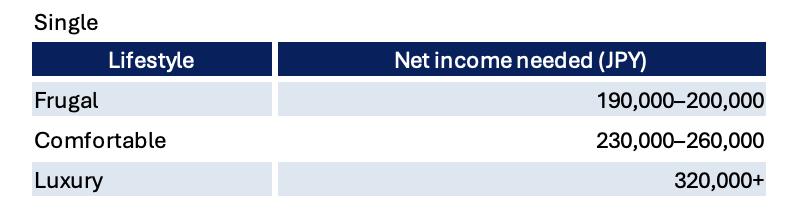
Below, we show income ranges for each lifestyle, followed by detailed breakdowns for the comfortable lifestyle, which most working residents aim for.
2. Monthly Living Cost: Single Professional
Net Monthly Income Needed
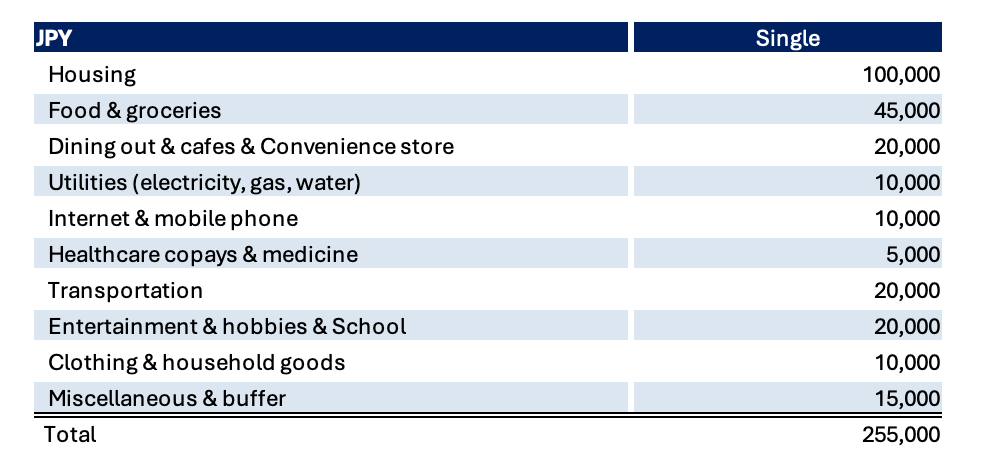
Sample Monthly Breakdown — Comfortable Lifestyle
The example below assumes living alone in a 1DK apartment (one bedroom plus dining and kitchen space), a common choice for professionals planning to stay in Japan for more than a short period.
Practical Notes for Single Residents
Apartment size choice matters.
A 1DK (One bedroom and dining/kitcen space) offers better separation between living and kitchen space, especially for people working from home. However, choosing a 1K apartment (single room and kitchen) can reduce rent to around JPY70,000–80,000, depending on location and building age.
Dining out habits strongly affect budgets.
Many single residents under 35 tend to spend more on dining out or convenience-store meals, often around JPY20,000 or more per month.
Groceries are sold in small portions in Japan.
Supermarkets commonly sell vegetables and ingredients in half or quarter portions, making it easy for single households to avoid food waste and control spending.
Mobile and internet costs can be reduced.
Bundled home internet and mobile phone plans or low-cost SIM providers can reduce monthly communication costs compared to major carrier contracts.
Transportation costs vary widely.
Many companies cover commuting costs through a commuter pass or expense reimbursement, so employees often pay little or nothing for commuting to work. Cycling for short trips can further reduce transport expenses.
Healthcare costs are generally manageable.
With Japan’s health insurance system, typical doctor visits and medicines are affordable, though occasional larger expenses should be expected.
3. Monthly Living Cost: Couple
Net Monthly Income Needed
Living as a couple allows many expenses — especially housing and utilities — to be shared, making it possible to enjoy a better standard of living without doubling total costs.
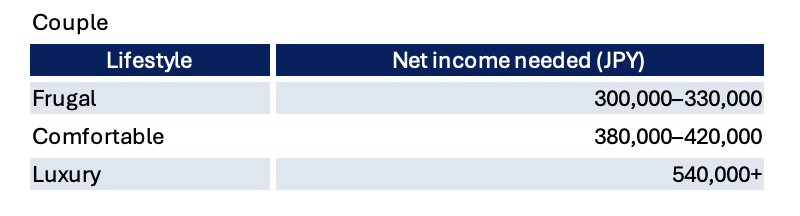
Typical combined net monthly income needed in Tokyo suburban or commuter areas:
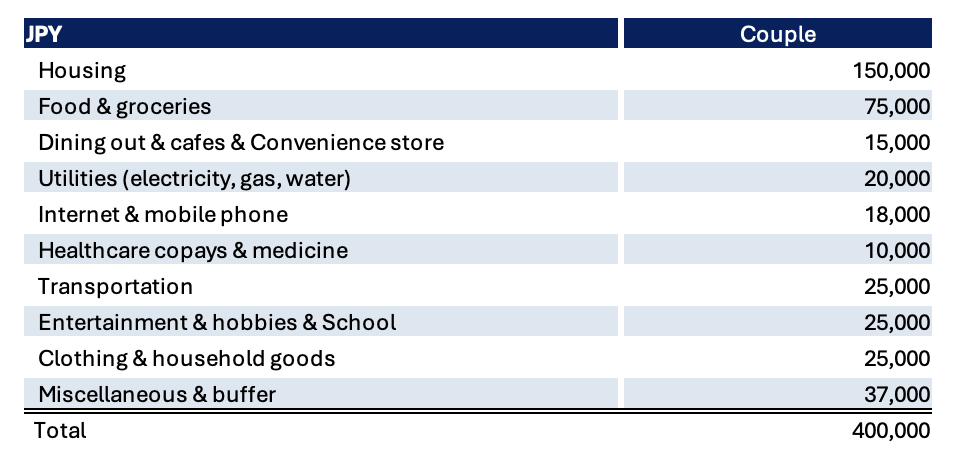
Sample Monthly Breakdown — Comfortable Lifestyle
The example below assumes living in a 2LDK apartment (two bedrooms plus living, dining, and kitchen space), a common choice for couples planning to stay in Japan medium- to long-term.
Practical Notes for Couples
Apartment size choice matters.
Some couples choose a 1LDK to reduce rent, but if both partners work from home or frequently attend online meetings, having an extra room for quiet workspace can significantly improve daily comfort.
Sharing costs does not mean costs are halved.
Food, travel, and entertainment expenses still increase with two people, but housing and utilities remain shared, creating overall savings compared with living separately.
Work commuting support reduces transport costs.
As mentioned, it is common for companies in Japan to cover commuting costs, so personal transportation expenses are usually limited to private travel and leisure.
Lifestyle expectations influence spending.
Couples often travel more, dine out together, or upgrade housing faster than singles, so budgets can rise quickly if spending is not monitored.
4. Monthly Living Cost: Family of Four
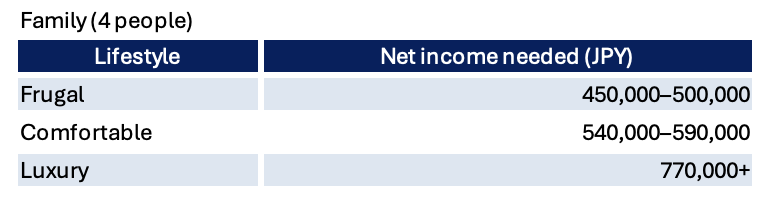
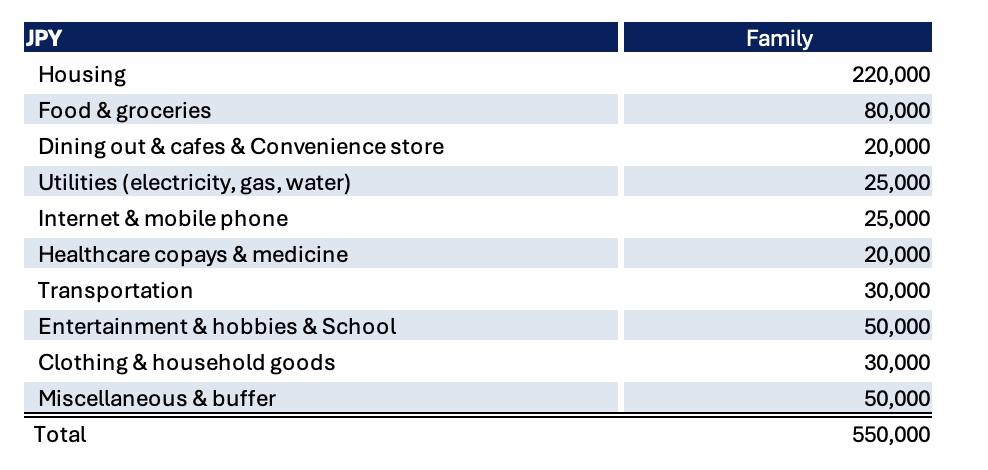
Living costs for families vary widely depending on housing size, childcare needs, and schooling choices. Families using public schools can keep expenses relatively manageable, while international schools or private education can significantly increase overall costs.
Net Monthly Income Needed
Typical combined net monthly income needed for a family of four living in Tokyo suburban or commuter areas:
Sample Monthly Breakdown — Comfortable Lifestyle
Practical Notes for Families
Housing location strongly affects cost and quality of life.
Families often move slightly farther from central Tokyo to secure larger living space, quieter neighborhoods, and proximity to schools and parks.
Education expenses increase as children grow.
Families with parents in their 40s and 50s commonly spend around JPY450,000–550,000 per year per child on education-related costs such as school activities, tutoring, and extracurricular lessons, even when using public schools.
International school costs are much higher.
Choosing international schools can dramatically increase living costs, often adding several hundred thousand yen per month depending on the school.
In addition, many children in Japan attend private lessons or activity clubs such as swimming, soccer, gymnastics, dance, piano, English, or academic tutoring. These activities are common but can add to overall education expenses.
Childcare costs vary by age and municipality.
Public childcare subsidies reduce costs in many cities, but applications are usually required, so be sure to check the related guide and apply early.
Related blog->
Raising Kids in Japan: Costs, Subsidies, School Choices & Real Challenges for Foreign Parents
Transportation needs grow with children.
Weekend outings, school commuting, and extracurricular activities increase transport spending compared with single or couple households.

5. How Living Costs Translate to Salary in Japan
Japan uses a progressive income tax system, meaning the tax rate increases as income rises rather than applying one flat rate to all income.
n addition to income tax, residents also pay local resident tax and social insurance contributions, including pension, health insurance, and long-term care insurance (for those aged 40 and over).
As a rough guideline, after these deductions, take-home income usually looks like this:
An annual salary of around JPY5 million typically results in roughly JPY3.8–4.0 million net income, or about JPY320,000 per month.
An annual salary of around JPY8 million usually results in about JPY5.9–6.0 million net income, or roughly JPY490,000–500,000 per month.
An annual salary of JPY10 million results in approximately JPY7.2 million net income, or about JPY600,000 per month.
This connects directly to the budgets shown in this guide, which are based on net monthly income available for living expenses.
For example:
A single professional aiming for a comfortable lifestyle typically needs about JPY230,000–260,000 net per month,meaning a gross salary around JPY3.5 – 4 million annually is often sufficient. (For reference, the average starting salary for new graduates in Japan is about JPY3.7 million per year, often supplemented by seasonal bonuses.)
A couple targeting a comfortable lifestyle usually needs around JPY380,000–420,000 net per month combined,which often corresponds to a combined household income around JPY6 - 6.7 million annually.
A family of four living comfortably may need about JPY540,000-590,000 net per month, typically requiring household income around JPY8.8 - 9.8million annually, depending on housing and education choices.
Actual take-home income varies depending on family structure, deductions, and employer benefits, but these figures provide a practical starting point when planning a move to Japan.
In practice, living costs become much more manageable with dual income, while single households usually have greater flexibility in choosing where and how to live.
For some foreign couples and families, however, dual income may not be possible immediately due to visa restrictions or childcare availability, so it is wise to plan budgets assuming temporary single-income periods, especially during the first year or two in Japan.
6. Tokyo Central vs Suburban Living
Housing location creates the biggest difference in living costs in Japan.
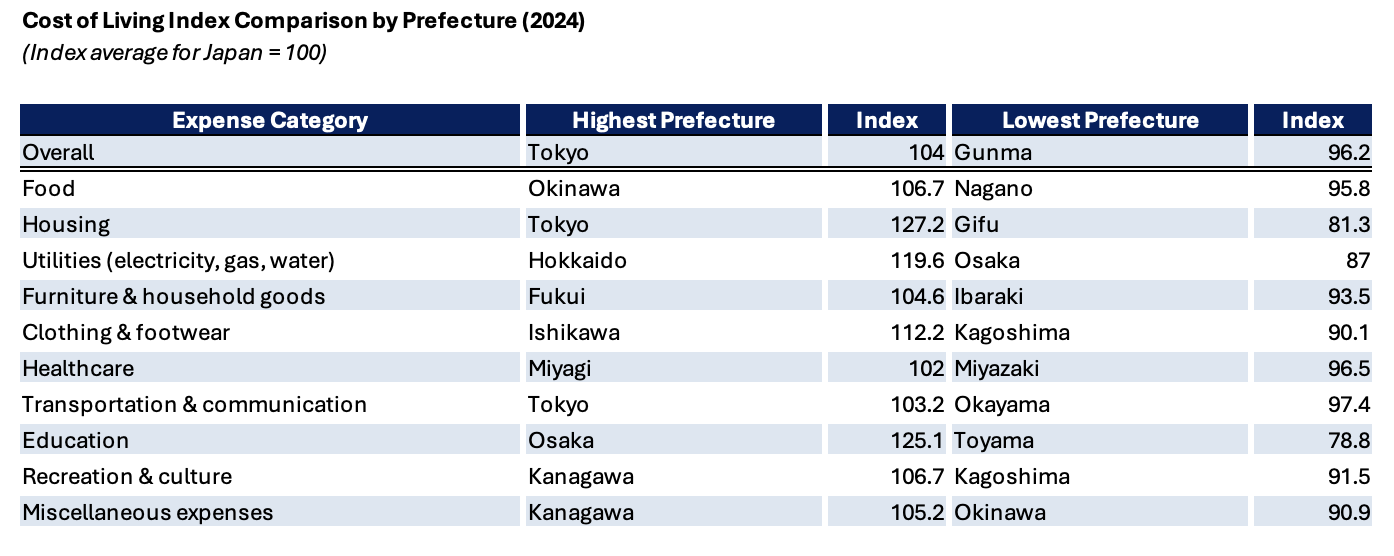
According to official statistics, living costs vary across prefectures, with Tokyo and nearby metropolitan areas ranking among the most expensive, largely driven by housing costs.
Meanwhile, several regional prefectures such as Gunma, Miyazaki and other non-metropolitan areas tend to have lower living costs, especially in housing.
However, regional cost differences reflect factors such as utilities (including winter heating costs), transportation, and local consumption patterns. For people relocating to Japan, housing costs and commuting distance usually matter more than prefecture-wide averages.
As a result, moving even 30–60 minutes outside central Tokyo can significantly reduce monthly living expenses while maintaining access to the city.
Source: Statistics Bureau of Japan (2024 Consumer Price Structure Survey)
Why This Matters
The data shows that housing costs are the biggest factor behind regional cost differences.
In Tokyo, housing costs are about 25–30% higher than the national average, while many nearby prefectures are significantly cheaper.
Singles, couples, and families often find they can get larger or newer housing while paying less rent, making suburban or commuter areas a practical option once daily commuting patterns become clear.
On the other hand, many singles choose to live closer to central Tokyo, accepting smaller or older apartments in exchange for the convenience of living within cycling distance of work and entertainment areas.

7. Optional Extras
The budgets above cover typical living costs, but lifestyle choices can add significant monthly expenses. Common optional costs include:
Car ownership in Japan has been declining for over a decade, especially in urban areas. Many households rely on public transportation instead.
Owning a standard passenger car typically costs around JPY520,000–610,000 per year, including fuel, insurance, maintenance, inspections, and parking. In cities, monthly parking fees alone can be significant.
Pet Ownership
Pet ownership can also add noticeable monthly expenses, including food, grooming, veterinary visits, and pet supplies.
Household surveys show that some single female residents aged 35–50 spend around JPY30,000 per month on pet-related costs, although spending varies depending on pet type and health needs.
Japan also has rental housing restrictions for pets, and pet-friendly apartments often charge higher deposits or rent.
Gym Membership
Gym memberships typically cost around JPY7,000 – 10,000 per month.
However, many residents reduce gym expenses by walking or cycling for daily transportation, or using public sports centers, which are often much cheaper.
Practical Tip
When planning a relocation budget, it helps to separate essential living costs from lifestyle upgrades, since optional expenses can easily add JPY30,000–100,000 or more to monthly spending.
A Personal Note on Gym Memberships
My husband and I once tried to join a local gym but were declined because his Japanese ability was considered insufficient for understanding emergency announcements.
Policies vary, and some gyms are more flexible, but newcomers who are not confident in Japanese may find it easier to join international or foreign-operated gyms — which is what we ultimately did.
8. Common Budgeting Mistakes
Common financial surprises for newcomers include:
• Underestimating initial move-in costs, such as deposits, key money, and agency fees. Some properties waive these costs. In addition, rental properties in Japan are typically unfurnished.
• Forgetting that resident tax payments typically begin in the second year of living in Japan, which can noticeably reduce take-home income if not planned for.
• Not budgeting for trips home or unexpected emergencies. NMost expats may need to fly home for urgent family matters or deal with unexpected illness while living in Japan.
• Overlooking global tax compliance costs. U.S. citizens and some other foreign residents may need to file taxes both in Japan and their home country. Many people choose to use specialized accountants, which adds recurring annual expenses.
• Visa, residence status, and driver’s license renewals
Fees are usually small, but applications can sometimes require professional help or extra procedures, so it is wise to budget for them in advance.

9. Q&A
Q1. Can I live in Japan on JPY200,000 (net) per month?
A1. Yes, it is possible. According to the 2024 Household Survey by Japan’s Statistics Bureau, the average monthly living cost for a single person renting an apartment was about JPY187,600.
The key is finding affordable housing. To stay within this budget, rent often needs to be kept around JPY40,000–50,000 per month, and food expenses around JPY30,000–40,000, with careful control of other spending.
However, living overseas can involve unexpected costs as mentioned abvoe. For this reason, it is important to build some savings by limiting unnecessary purchases and dining out whenever possible.
This level represents a frugal lifestyle, and newcomers often spend slightly more, especially in their first year.
Q2. Do foreigners pay the same taxes as Japanese residents?
A2. Yes. Once you become a resident, taxes and social insurance apply equally.
Q3. Is moving to Japan without company support realistic?
A3. Absolutely. However, good financial preparation is important. Wrapping up matters in your home country, obtaining a visa, arranging flights, setting up housing, and completing municipal registration in Japan are all exciting but can also feel overwhelming at times. Initial relocation costs can add up quickly, so careful planning is essential.
That’s exactly why NavigatorJapan.com is here — to help make the process smoother.
Related blog: How Long Does It Really Take to Move to Japan? Timeline from Job Offer to Landing
10. Wrap up
Living costs in Japan vary greatly depending on lifestyle expectations, housing choices, and spending habits. Careful planning helps reduce financial stress and makes settling in Japan much smoother.
To estimate your own budget, review the cost examples in this guide and adjust them based on your lifestyle and priorities.
If you have experiences or questions about working in Japan, feel free to leave a comment or send me a note!
And if you found this guide helpful, please consider sharing it with friends, colleagues, or family members who may also be planning a move to Japan.
References
Statistics Bureau of Japan — Family Income and Expenditure Survey (2024)
Ministry of Health, Labour and Welfare — Basic Survey on Wage Structure (2025)
SUUMO Journal — Average Rent Trends Across Japan
CDE Direct
Estimated Monthly Living Costs in Japan (Single Households)
Related blog:
How Long Does It Really Take to Move to Japan? Timeline from Job Offer to Landing
