

The Expat Pet Guide 2025: Living in Japan With a Dog or Cat (And Keeping Your Sanity)
Pets are popular in Japan — but having a pet here is very different from having one in the U.S. There’s less space, most likely no backyard, and apartment rules can feel strict or confusing.
But don’t worry. Tens of thousands of foreigners and foreign families live happily in Japan with dogs and cats.
This is the guide I wish existed when we moved to Japan with Jager — how to own a dog or cat in Japan without losing your apartment (or your mind).
This blog Covers
Why Japan Is Secretly One of the Hardest (and Best) Places for Pets
The Sacred 7-Month Rule: Importing Dogs & Cats
Finding a Pet-Friendly Apartment
Mandatory Pet Registration
Vet Costs & Pet Insurance Comparison
Daily Etiquette — Or Your Neighbors Will Hate You
Where to Go for Food, Toys, Grooming, and Daycare (English-Friendly)
Small or Exotic Pets
FAQ
Wrap up

1. Why Japan Is Secretly One of the Hardest (and Best) Places for Pets
Hardest
Apartments average 35–55 m² → space is premium
Most rentals don’t allow pets, make sure you search for listings that clearly say pets are allowed (ペット可) If you own your own house, there are no pet restrictions.
Strict noise, smell, and poop etiquette
Import rules for dogs/cats are among the world’s toughest (To import dogs and cats from non-designated regions, they must meet import requirements such as microchip implanting, at least two times rabies vaccinations, rabies antibody test, and 180-day waiting.)
See more detail: Japan Animal Quarantine Service (Official MAFF Website)
Best
World-class veterinary care
Pet culture is exploding — pet cafés, strollers, designer clothes, hotels.
Public transport pet-friendly if you follow the rules (Less than 10 Kg in a cage)
2.The Sacred 7-Month Rule: Importing Dogs & Cats (Start BEFORE You Move!)
If your pet is already in Japan → skip to section 3. If not, this timeline is non-negotiable.
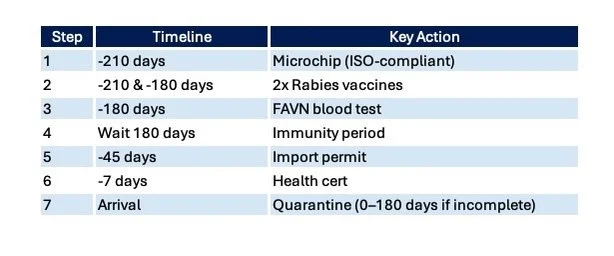
See more detail in: Moving to Japan with a Dog: Jager’s Journey from Chicago
Estimated 2025 Import Costs
Chicago U.S. → Tokyo: JPY250,000–JPY500,000
Europe → Tokyo: JPY400,000–JPY800,000
*Low end: Vet+Cage+basic cargo via JAL. High end: Full-service PetRelocation
There are some service providers: Use PetRelocation, Pacific Pet, or Ferndale Kennels
Tip: Don’t underestimate the process. In our case, bringing Jager to Japan was far more challenging procedurally than logistically. The flight was easy—the paperwork, testing schedule, and communication with animal quarantine were not.
3. Finding a Pet-Friendly Apartment
Only 10–20 % of Tokyo/Osaka rentals allow pets (2024–2025 data from SUUMO surveys and E-Housing market reports).”
Sources: E-Housing – Best Places for Pet Owners 2025, Japan Luxury Realty Group (citing SUUMO)
Demand is rising → new buildings advertise “Pet OK” to attract residents.
English-friendly pet-specialist agents (2025)
Pet home -> Pet friendly
Ken Corporation Pet Division → luxury only
NOTES:
Read the contract carefully. Check all pet-related conditions, such as “only one pet,” “under 10kg,” “no large dogs,” or “no urination on the balcony,” etc.
You are required to restore the unit to its original condition when you move out. Your security deposit will be used for this purpose. To prevent pet-related damage to floors or walls, prepare in advance with rugs or protective coverings.
Even in pet-friendly buildings, be mindful of excessive barking.
Check whether there is an animal hospital nearby.
Golden rule: Never lie on the application. If the landlord finds out later, instant eviction.
4. Mandatory Pet Registration
Complete the registration within 30 days of arrival or as soon as you own a pet.
Dogs
a. Microchip & City Registration (Free) - Visit your local city or ward office and register your dog.
Bring your residence card
Provide microchip information
Registration is free. After registration
You will receive an official dog license tag (鑑札).
b. Annual Rabies Vaccination
Japan requires one rabies shot per year. You can get it in two ways:
At the city’s group vaccination event.
At any animal hospital
You will receive a vaccination tag (注射済票) after the shot.
Fines up to JPY200k for no rabies shot.
c. Attach the Tags to Your Dog’s Harness or Collar
By law, your dog must wear both:
The dog license tag (鑑札)
The rabies vaccination tag (注射済票)
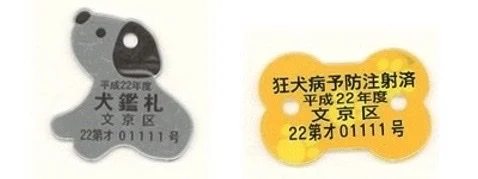
Sample license tag and rabies vaccination tag. The shape and design vary depending on the city or ward. The example above is from Tokyo’s Bunkyo Ward.
Cats
Microchip + City Registration: Register your cat at your local city office. Free. Bring your residence card.
Vaccinations: There is no legal requirement for annual vaccinations for cats, but vets strongly recommend them to prevent infectious diseases.
No tax in Japan for individual pet ownership

5. Vet Costs & Pet Insurance
Typical Cost range (Tokyo)
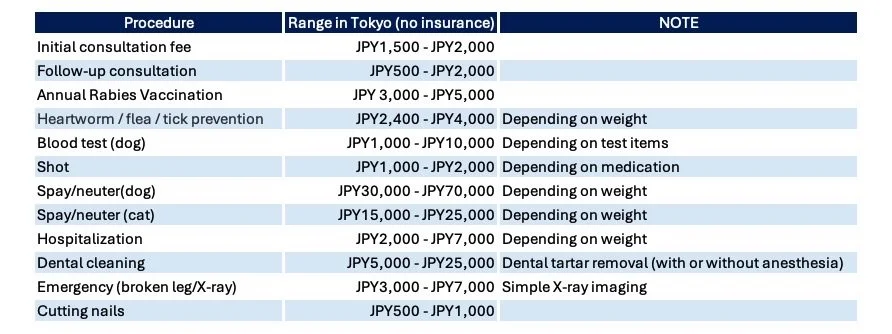
Source (2023): https://jvma-vet.jp/clinic/ryokin_pdf/r5.pdf
Top Insurance Options
Foreigners can enroll, although English support appears minimal.
Market Leader: Widely recognized as Japan’s No.1 pet insurance provider based on the number of active contracts.
Great Convenience: Famous for its OTC Settlement System (窓口精算), which lets you pay only your portion(e.g., 50% or 30%) directly at the vet—just like human health insurance. No need to pay the full amount upfront and wait for reimbursement.
Animal hotline
Direct Payment at Partner Clinics: Offers a similar direct payment system at its network of affiliated animal hospitals, which many pet owners find extremely convenient.
Flexible Coverage: Provides multiple coverage levels (e.g., 50% or 70%) for both accidents and illnesses, allowing you to choose a plan that fits your needs.
Real Story
Jager (Our dog) turned 11 this year – prime senior territory for dogs. Until February 2025, vet visits were rare. Then an immune disorder hit: JPY50,000–60,000 monthly on consults, meds, and tests. With pet lifespans in Japan getting longer, this level of medical care has become the new normal. We want him to stay with us as long as possible.
This is why I always say: enroll in pet insurance early. Lock in low premiums while your pet is young, or you’ll face steep senior-age increases later. In Japan, premiums are age-banded—low for puppies and kittens (around JPY 1,800–3,000/month for a young small dog), rising 20–50% every 2–3 years as they age (often JPY 4,000–6,000/month once they pass eight years old).
6. Daily Etiquette — Or Your Neighbors Will Hate You
Japanese people love animals but hate trouble.
Follow these → you’ll be known as “the foreigner with the cute dog,” not “that foreigner…”
Always carry poop bags + a small water bottle → wash away pee.
Pet barking is the most common cause of neighborhood complaints—especially after 9 PM. Be careful.
Elevator rule: Wait or ask: 「一緒にいいですか?」 (“Is it okay to ride together?”)
Most apartments allow one pet → always confirm with your agent
No pets on tatami → scratches = JPY100,000+ repair.
Balcony potty trays may not be allowed.
Real Story
In our apartment complex, pets are officially allowed — but with strict rules, including a 10kg weight limit. When I volunteered as the pet organization lead in 2023, a resident complained about a dog barking too much. My predecessor said this happens almost every other year. Another resident even had to move out because she secretly kept two dogs.
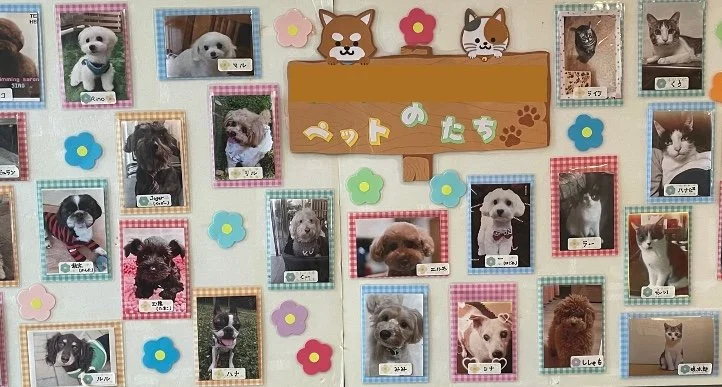
And yet… nearly 40 dogs and cats now live happily here. Pet owners are responsible, neighbors are friendly, and at the main building entrance, you can see everyone’s pet photos proudly displayed. It works because people follow the rules.
7. Where to Go for Food, Toys, Grooming, and Daycare
Pet Food
You can find almost all major U.S. and international pet food brands in Japan—either in stores or online.
Where to buy:
Amazon Japan
Local home centers (Cainz, Nitori Deco Home, Kojima, etc.)
Pet shops (Pet Plaza, Kojima Pet, AEON Pet)
Large grocery stores (AEON, OK Store, Ito Yokado)
Popular brands in Japan:
Purina One – My recommendation: around JPY1,683 for three 700g packs.
ROYAL CANIN
Nutro Wild Recipe
Blue Buffalo Life Protection
Cesar Wet Dog Food
Pedigree
For cats:
Kalkan: Liquid food
CIAO Churu – Japan’s famous liquid cat treat
Toys & Clothes
Easy to find almost anywhere, including:
Amazon
Don Quijote (Donki)
Loft / Tokyu Hands
Pet shops
Local home centers
Grooming
Most neighborhoods in Japan have grooming salons, and prices vary depending on your dog’s size, breed, and condition. Jager (Our dog) becomes very anxious during grooming, my husband now trims him at home instead. All the necessary tools are easily available on Amazon.
Options:
Nearby grooming shops (search “pet grooming + your area”)
Daycare & Pet Hotel
Many veterinary clinics in Japan offer daycare or overnight stays.
Your local vet
Local home centers (they usually have a full pet department)
Membership-based option:
WanCott (Yokohama) – pet hotel, dog park, training school, and community events. Great place to meet local dog owners.
Training Schools
Animal Plaza (Puppy School)
Tokyo Dogs (Training & Behavior Support)
Dog Sitters
Poppins Pet Care – nationwide dog-sitting services
Dog friendly Resort Hotel (English sites available)
Doggy’s Island (Chiba Pre)
Shikinokura (Shizuoka pre)
And more. Search “Pet friendly hotel” or “dog-friendly resort hotel”.
8. Small or Exotic Pets
No registration for small pets.
Easy: fish, hamsters, small birds
Popular: turtles, ferrets.
Allowed but caution: lizards, snakes. ―Use secure double locks; consider voluntary registration.
NOTE: Dangerous animals that may cause harm to humans, as well as their hybrid offspring (designated dangerous animals), are prohibited from being kept as pets or for ornamental purposes in Japan.
Real Story: When a Python Escaped and the Neighborhood Panicked (2021)
In 2021, a pet owner returned home to discover that his 3.5-meter python had escaped and immediately called the police. An emergency alert went out, warning residents that a large snake was on the loose. More than 270 police officers and firefighters were mobilized, searching gardens, drains, rooftops, and apartment stairwells.
After two weeks of searching, they finally found the python curled quietly in the attic. The incident was widely reported on TV news and social media. The owner publicly apologized, and the snake was ultimately taken into custody by the Yokohama city office.
In the United States, depending on the region, it happens to see bears lounging in backyard pools or dears crossing the road. But in Japan, people rarely encounter wild animals—so a single snake can cause major panic. If you keep exotic pets here, you must be extremely careful and secure their enclosures.

9. Q&A
Q1: Can I bring two pets?
A1. It depends. But many apartments allow only one. Always confirm first.
Q2: Can big dogs live in Japan?
A2. Yes — but housing is tricky. With the right location and property type, living with a big dog in Japan is absolutely possible. Look for:
Newer buildings are more likely to allow pets, reflecting higher tenant demand
Suburban areas (Chiba, Kanagawa, Saitama)
Single-family houses, which offer more space and fewer restrictions than apartments
Q3: Can I walk my dog off leash?
A3. Absolutely not. Leash laws are strict.
Q4: Are cats easier than dogs?
A4. Yes. Smaller footprint, quieter, fewer complaints. But some buildings still require one pet only.
Q5: Which carriers are accepted on trains?
A5. Soft or hard carriers sealed fully. JR rule: pet + carrier = <10kg.
Q6. Are there emergency animal hospitals open at night?
A6: Yes, but availability varies by region. Please check with your regular veterinarian for recommendations in your area.
For example, in Yokohama (Kanagawa Prefecture):
Yokohama Animal Emergency Medical Center – VECCS Yokohama
DVMs Animal Medical Center Yokohama
Q7. I lost my pet. What should I do?
A7: If you lose your pet in Japan, the most important thing is to act quickly and contact the right places right away. Start by notifying the local public health center (hokenjo) and the animal control center in the area where your pet was last seen.
You should also visit or call the nearest police box (koban) and inform nearby animal hospitals and clinics, as people often bring found pets directly to these locations.
At the same time, begin searching actively in your neighborhood. Use SNA such as X. Put up posters and flyers, ask neighbors and building management for help, and use community bulletin boards and online lost-pet platforms to spread the word. The more people who know your pet is missing, the better your chances of being reunited. Quick action and wide communication truly make all the difference.
10.Wrap up
Jager crossed the Pacific with my American husband—he’s our walking slice of home in Tokyo. A former boss of mine did the same with her cat, whom she named Michael. Then she married a man named Jackson… and suddenly the cat was Michael Jackson. Pets really do carry memories across oceans.
Tokyo isn’t easy—small apartments, strict rules, no backyards. But with the right prep, respect for local etiquette, and a little flexibility, your dog or cat can thrive here. Follow the rules, embrace the culture, and Japan will surprise you with how big its heart really is for furry family members. Welcome to the club.
What’s your pet’s best (or worst) Japan story? Jager and I would love to hear from you.
References
Japan Animal Quarantine Service (MAFF): https://www.maff.go.jp/aqs/animal/dog/import-other.html
Ministry of the Environment – Animal Welfare & Management: https://www.env.go.jp/nature/dobutsu/aigo/shuyo/
