

Bringing and Refilling Chronic Medications in Japan: What We Learned the Hard Way
One of our biggest concerns when moving to Japan was access to essential medication. My husband has a heart condition, and continuity of care was not optional—it was critical.
Japan has an excellent healthcare system, but it is built on assumptions: domestic medical records, standardized prescribing practices, and long-term residency. For foreigners—especially those managing chronic conditions—those assumptions can quickly become blind spots.
This article is not a general overview of Japan’s healthcare system. It is a practical account of what worked, what did not, and what surprised us most when trying to secure ongoing medication after relocating. My goal is to help others avoid unnecessary stress, delays, and risk.
Medical disclaimer:
This article is based on personal experience and publicly available information. It is not medical advice. Always consult a qualified healthcare professional regarding diagnosis, treatment, and medication.
This blog covers:
1. Bring Medical Records and Medication
2. See a Doctor Immediately—Expect Several Dead Ends First
3. “Common” Medications Are Not Common Everywhere
4. Medication notebook/お薬手帳
5. Generic Medication Is the Default
6. Health Insurance Timing Matters
7. Import Rules: Know the Limits
8. Q&A
9. Wrap up
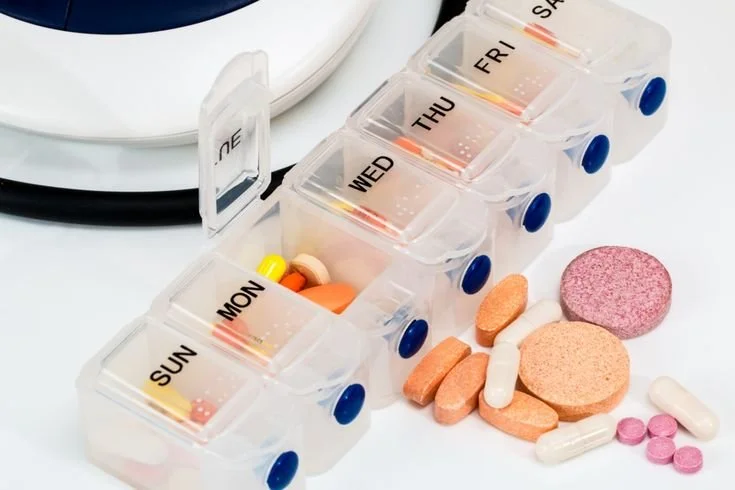
1. Bring Medical Records and Medication
If there is one thing I would emphasize, it is this: bring as much medical record and medication as legally possible.
What We Brought
Medical records in a portable digital format (USB), including:
Diagnoses
Test results
Cardiac imaging
A three-month supply of prescribed medication obtained just before departure
A comprehensive medication list
We asked our cardiovascular specialist in the U.S. to prepare the records. The hospital’s medical records office compiled the data, and we picked it up a few days later—free of charge. For comparison, in Japan, issuing a formal medical information summary (診療情報提供料) typically costs around JPY 2,500 (with an out-of-pocket portion of approximately JPY 750).
⚠️ Critical Note: Import Rules for Prescription Medication
To bring more than a one-month supply of prescription medication for personal use into Japan, you are required to apply for Import Confirmation (輸入確認証) before entering the country.
In reality, most travelers are never asked about import permits at customs. However, the absence of routine checks does not eliminate risk—it simply shifts it to situations where medication is flagged later (for example, during inspection, shipment, or inquiry).
Understanding this rule is therefore not about fear, but about informed risk management.
Online application (now relatively simple, often approved quickly):
What Your Medication List Should Include (Critical)
Generic names (essential)
Brand names (important—many differ in Japan)
Dosage and frequency
Purpose of each medication
Previous adverse reactions
Why adverse reactions matter:
Japanese doctors may be cautious about prescribing unfamiliar medication. Clearly documenting past adverse reactions helps them make safe decisions more quickly and reduces trial-and-error prescribing.
Should You Translate Key Medical Terms into Japanese?
We received all medical records in English, and the doctors we consulted were able to understand them without difficulty.
However, this generally does not extend to medical records written in other languages, such as Chinese or European languages. If your documentation is not in English, translation into Japanese is strongly recommended.
Even when records are in English, translating key elements into Japanese can still be helpful—especially when dealing with complex cases or time-constrained consultations.
Consider translating:
Diagnosis names
Surgery types
Chronic condition descriptions
Even partial translation can bridge communication gaps, speed up consultations, and reduce the risk of misunderstanding.

2. See a Doctor Immediately—Expect Several Dead Ends First
Soon after arrival, we went to a large hospital to secure ongoing medication. We were able to see a physician, but were told that the hospital primarily handled acute or referred cases, and that for routine prescriptions we needed to visit a local primary-care clinic.
This distinction is important in Japan:
Large hospitals: Acute cases, referrals, or visits with additional fees (JPY5,000+)
Local clinics: Ongoing, routine care and prescription management
Many newcomers assume large hospitals are the safest first stop. In reality, they are often not the most practical option for continuity of care.
The Specialist Trap
Our next assumption was that a cardiovascular specialist would be the most appropriate choice. However, many Japanese clinics operate under narrowly defined practice scopes.
We found a vascular specialist who confirmed that he fully understood my husband’s medication. However, he explained that, as a general principle, Japanese physicians are cautious about providing long-term prescriptions for conditions outside their formal specialty.
Temporary prescriptions or treatment coordinated with another specialist may be possible, but for ongoing medication management, visiting a local internal medicine or general practitioner is often the fastest and most appropriate path.
This was not a lack of knowledge—it was a matter of professional boundaries and safety measure. I, as a Japanese returning after more than a decade, made the mistake.
The Unexpected Solution: A Generalist
Eventually, we visited a local internal medicine clinic. We were unsure whether the doctor would be able to prescribe all the medication. When he reviewed the list and confirmed that commonly used drugs—such as those for blood pressure and cholesterol—were manageable, we felt enormous relief.
Key takeaway:
If your medication is highly specialized, confirm availability in Japan before moving.
For common chronic conditions, a competent general practitioner may be your best first stop.
⚠️ Critical Note: Monitor Your Condition Closely After Medication Changes
This section is based on our personal experience, but it is important.
When transitioning from medication prescribed in one country to a new regimen in Japan, monitor symptoms carefully. Even when medications appear equivalent, differences in dosage, formulation, generic substitution, or interaction can affect how your body responds.
In our case, after switching medications under the care of the local internal medicine doctor, my husband’s blood pressure became elevated. We returned to a large hospital with a referral letter from the local clinic and consulted a cardiovascular specialist. My husband monitored his blood pressure twice daily, morning and evening, and brought the recorded data to each appointment. The specialist adjusted the medication, and his blood pressure stabilized again.
To be clear, we cannot definitively say what caused the sudden change—whether it was the medication switch, dosage differences, or other factors. However, the adjustment resolved the issue.
Practical advice:
Do not wait too long if symptoms change
Ask your primary-care doctor for a referral to a specialist when needed
Large hospitals and specialists play an important role—but often after primary care, not instead of it
Lessons Learned: Medical Data Compatibility Is Not Guaranteed
Although our new cardiovascular doctor was genuinely interested in my husband’s U.S. medical history, he initially could not access the data stored on a CD-ROM. With support from the hospital’s IT team, the records were eventually reviewed.
In hindsight, we should have requested the data in a more universally compatible format, such as a USB drive or cloud-accessible files. We had assumed that CD-ROMs were standard in medical settings, but that assumption created unnecessary delay.
Recommendation:
When requesting medical records, ask explicitly about file format compatibility and request multiple formats if possible.

3. “Common” Medications Are Not Common Everywhere
One of the biggest surprises was how differently medication is classified in Japan.
Aspirin: A Critical Example
Aspirin is a core medication for my husband to thin the blood and is available over-the-counter (OTC) in the U.S. We routinely purchased 81 mg enteric-coated aspirin, so we did not include it on our prescription list when preparing to move.
That was a mistake.
In Japan, low-dose aspirin is not generally available over the counter. When his supply ran out and we could not find an equivalent product at local pharmacies, we had to visit the emergency department of the large hospital. The physician explained that low-dose aspirin requires a prescription in Japan, and that the smallest commonly prescribed dosage is 100 mg.
While there are over-the-counter aspirin-based pain relievers such as Bufferin (e.g., 330 mg/tablet), these are formulated for pain relief rather than cardiovascular prevention and were not appropriate substitutes for his condition.
Lesson learned:
Never assume that over-the-counter availability—or dosage standards—translate across borders.
Cold Medicine and Heart Conditions
In the United States, we used an over-the-counter cold medication designed for people with heart conditions—Coricidin, which excludes ingredients that can raise blood pressure. That medication is not available in Japan.
Japan has many cold remedies, but:
Formulations differ
Some products contain ingredients that may be unsafe for people with cardiovascular conditions
Because labeling conventions and ingredient names also differ, it can be difficult to assess safety without professional guidance.
Practical advice:
Always consult a pharmacist or doctor before taking cold or flu medication in Japan—even for symptoms that seem minor or familiar.
A Broader Caution
Aspirin and cold medicine are just two examples. There are many other medications that are commonly available over-the-counter in one country but require prescriptions—or differ in dosage and formulation—in Japan.
Keeping this possibility in mind, and checking in advance rather than assuming availability, can prevent unnecessary stress and medical risk.
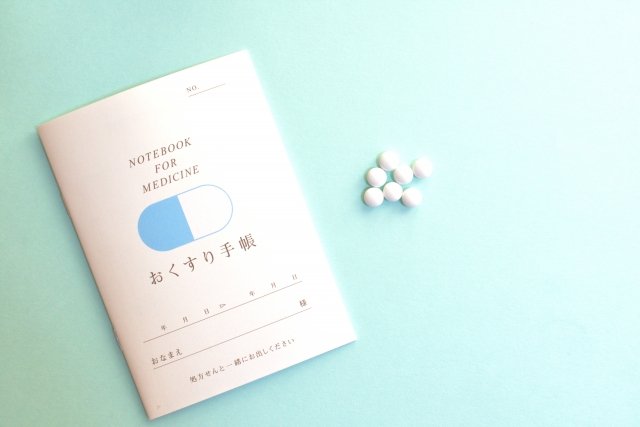
4. Medication notebook/お薬手帳: A Surprisingly Useful System
Japan uses a physical medication notebook called an お薬手帳 (Okusuri Techo), which is issued by pharmacies and used nationwide to track prescription history.
The notebook typically records:
Medication names
Dosages
Frequency of use
Intended effects
Printed guidance (often available in English)
Many entries include photos or illustrations, which makes it easier to identify medications at a glance—particularly helpful when names or packaging differ.
Why the Medication notebook Is Extremely Useful
This small notebook becomes invaluable:
When visiting a new doctor
During emergencies
When managing multiple prescriptions
When explaining your medication history without relying on memory
Because Japan’s medical system is highly documentation-driven, presenting a Medication notebook often speeds up consultations and reduces the risk of prescribing errors.
Digital Options: Medication notebook Apps
In addition to the physical notebook, there are free apps that serve the same purpose. These apps allow you to manage medications digitally and centralize health-related information.
Depending on the app, features may include:
Medication management and reminders
Payment for pharmacy services
Online medication guidance
Input and tracking of blood pressure and other health data
Multiple apps are available for free, but it is generally advisable to use the app supported by your regular pharmacy, as integration and functionality vary by provider.
The Ministry of Health, Labor and Welfare provides a comparison of approved medication management apps:
Recommendation
Whether you use the physical notebook, a digital app, or both, always carry your medication record with you. In Japan, this simple habit can significantly improve the quality, speed, and safety of medical care.
5. Generic Medication Is the Default
In Japan, generic medications are the default option. Since October 2024, a new rule has further strengthened this approach.
If a generic equivalent is available but a patient chooses the original brand-name medication (referred to as a “brand-name drug”), an additional out-of-pocket charge is applied. This surcharge is classified as a “special fee” (選定療養). This mainly affects long-term users of older drugs (e.g., some statins, blood pressure meds). Newer drugs often don't have generics yet.
How the System Works
This policy is part of Japan’s broader effort to control rising healthcare costs. Unless a physician determines that the brand-name medication is medically necessary, the rule applies and increases the patient’s personal expense.
Under the special system, when a patient voluntarily chooses a non-covered or higher-cost option, they are required to pay the price difference out of pocket.
Example
Brand-name drug price: JPY100
Generic equivalent price: JPY60
Price difference: JPY40
In this case, one quarter of the difference (JPY10) is added to the patient’s out-of-pocket cost (plus consumption tax), on top of the standard insurance co-payment.
The intent is to encourage the use of lower-cost generic medications by increasing the financial burden on patients who opt for brand-name drugs without medical necessity.
Official reference (MHLW):
What This Means for Foreign Patients
This policy is not necessarily negative, but it can be surprising if you are accustomed to brand continuity or have used the same medication for many years.
When switching to a generic:
Confirm equivalency with your doctor or pharmacist
Monitor your condition carefully after the change
Report any unusual symptoms promptly
If you have a legitimate medical reason (for example, allergies or adverse reactions to a generic), consult your doctor about continuing the brand-name medication.
In Japan, pharmacists are often proactive about explaining generic substitutions and are a valuable resource if you have concerns.

6. Health Insurance Timing Matters
In Japan, you generally cannot receive prescriptions without health insurance. Understanding how and when coverage starts is essential to avoid delays or unexpected costs.
National Health Insurance (NHI)
Enrollment in National Health Insurance typically takes place after you register your residence at your local city or ward office.
If you apply in person at the municipal counter, a health insurance card is often issued on the same day
If you request delivery by mail, it usually takes about one week
Until the card is issued, medical facilities may:
Treat you as having “forgotten your insurance card”, or
Ask you to pay 100% of the medical cost upfront
If you pay the full amount, you must later apply at your city or ward office for reimbursement of the insured portion (typically 70%), after coverage is confirmed.
Employer-Provided Health Insurance
If you are enrolled in employer-provided health insurance, coverage starts from your first day of employment and extends to eligible family members.
The physical insurance card may take a few days to arrive
If you pay medical costs before receiving the card, you can usually apply for reimbursement later
If you resign from your job, insurance premiums begin accruing from the day after your employment ends (the eligibility loss date). Any uninsured period will still be billed retroactively, so prompt enrollment in a new plan is important.
Plan Your Medication Supply Accordingly
Because prescriptions depend on active insurance coverage, it is important to plan your medication supply carefully during the transition period—especially if you require ongoing treatment.
My Number Card and Health Insurance
In Japan, the My Number Card can now be linked to your health insurance. Once you receive your My Number Card, you must register the linkage at your local city or ward office (or through designated systems) to use it as your health insurance card.
Until the linkage is completed, the My Number Card alone does not function as proof of insurance.
👉NOTE: For short-term visitors vs. residents—If you're visiting Japan as a short-term tourist (e.g., on a tourist visa or temporary visitor status), standard travel insurance policies often do not cover prescription medications in the same way as they might back home. Many travel insurances exclude or severely limit coverage for pre-existing conditions and ongoing/chronic prescriptions.
In practice:
Without Japanese public health insurance (National Health Insurance or employer-provided), you will pay 100% out-of-pocket for doctor visits, tests, and prescriptions.
Always ask the medical facility in advance for an estimated cost
7. Import Rules: Know the Limits
Japan has strict regulations on importing medication, supplements, and controlled substances. These rules are part of Japan’s broader public-health approach and contribute to the country’s low levels of drug abuse. However, they can create unexpected challenges for foreign residents managing everyday medication needs.
At a high level:
Quantity limits apply to medication for personal use
Certain medications and supplements require advance approval
Documentation may be required, even for personal use
Many travelers are never questioned at customs, which can create a false sense of security. However, enforcement is selective rather than nonexistent, and issues often arise later—during inspections, shipments, or medical inquiries.
Do not assume that “personal use” automatically exempts you from the rules.
Always check official guidance in advance and plan accordingly. For stimulants/narcotics (e.g., some ADHD meds like Adderall): they are strictly prohibited even with foreign prescriptions—many expats get caught here. Bring originals in labeled bottles + doctor's letter explaining the condition/medication in English (Japanese translation bonus).
Checklist: Medication Planning for Japan
✅ Before You Move
☐ Obtain full medical records in portable digital formats
☐ Confirm records are in English (or prepare Japanese translations if not)
☐ List generic and brand names of all medications
☐ Document previous adverse reactions
☐ Include dosage, frequency, and purpose for each medication
☐ Secure a multi-month medication supply, within legal import limits
☐ Confirm whether each medication is available in Japan
☐ Check Japan’s import rules and apply for approval if needed
☐ Identify which medications are OTC vs prescription in Japan
✅ After You Arrive
☐ Enroll in National/Employer-provided Health Insurance immediately
☐ Visit a local internal medicine clinic as soon as possible
☐ Bring your medication list and records to the first appointment
☐ Obtain and carry a medication notebook (or install a compatible app)
☐ Confirm generic substitutions and monitor your condition carefully
☐ Consult a pharmacist before taking OTC medication
☐ Request a referral letter promptly if specialist care is needed

8.Q&A
Q1. I’ve never been asked about import permits at customs. Does the rule really matter?
A1. Yes. While checks are uncommon at arrival, the rule still applies. Problems often arise later—during inspections, shipping, or medical review. Understanding the rule is about risk management, not fear.
Q2. Can I bring more than one month of prescription medication?
A2. Generally, bringing more than one month of prescription medication for personal use requires advance import approval. Always check current official guidance before travel.
Q3. Are over-the-counter medications the same as in the U.S. or Europe?
A3. No—OTC medications in Japan often differ significantly in availability, formulation, dosage, and ingredients compared to the U.S. or Europe. Never assume direct equivalency, as this can lead to ineffective treatment or safety issues.
Always consult a pharmacist (highly trained and approachable in Japan) or doctor before purchasing or using OTC meds—especially for chronic conditions, allergies, or if you're on other medications. Bring familiar supplies within import limits if possible, and check labels carefully.
Q4. Can specialists prescribe long-term medication?
A4. It depends. Many specialists in Japan are cautious about prescribing medication outside their formal scope of practice. Once acute symptoms are stabilized, patients are often referred back to a general practitioner, who typically coordinates long-term care and prescriptions.
However, if a condition requires ongoing specialist monitoring, a specialist may continue to manage long-term medication.
Q5. How do I find an English-speaking doctor or clinic for ongoing prescriptions in Japan?
A5. Start with local internal medicine clinics (内科), but for English support, use these resources:
International departments at large hospitals (e.g., St. Luke’s International Hospital in Tokyo, National Center for Global Health and Medicine)
Q6. What if my condition changes after switching medication?
A6. Do not wait. Monitor symptoms closely and ask your primary doctor for a referral letter to a specialist if needed.
9.Wrap-Up: Preparation Makes the Difference
Japan regulates medications, controlled substances, and narcotics very strictly—a key reason for its low drug abuse rates. For foreigners, this means everyday medication access often works differently than expected, with differences in dosage, formulation, or availability that can impact health.
Our experiences centered on cardiovascular care, but the lessons apply to many chronic conditions. After initial trials and adjustments, we’re now truly satisfied with our doctors in Japan and appreciate the quality of its healthcare system.
The key takeaway: With thorough preparation, continuity of care is absolutely achievable. Without it, small oversights can become serious risks.
I hope our story helps you avoid similar pitfalls and approach your move with confidence. If you’ve navigated medication or healthcare in Japan, please share your experiences in the comments—what worked, what didn’t?
If this guide was helpful, consider sharing it with others preparing for life in Japan.
Referrals
Aspirin-Based Over-the-Counter Medications in Japan (Bufferin Product Information)
Clinical Review: Aspirin Use in Cardiovascular Disease (Peer-Reviewed Article)
Ministry of Health, Labor and Welfare (Japan): Policy on Generic Medications and Additional Patient Charges
See also:
Japan's Mandatory Health Checkups for Foreign Workers: What's Required, Costs, and English Support
You Need CPAP in Japan? No Problem – Here's How
Pain Control in Japan: Why So Little Medication, and What’s Changing
