

Caring for Aging Parents in Japan from Overseas: What’s Realistic and How to Prepare
When I was living in the U.S., my father in Japan was diagnosed with prostate cancer. I still remember the moment I heard the news. Around the same time, a close friend of mine was flying back and forth between the U.S. and Japan almost once a month to care for her parent. Watching her exhaustion made the reality very clear.
When seniors are in Japan and family members are overseas, distance turns ordinary aging issues into urgent and complex problems. Japan’s medical and care systems are robust—but they are largely designed for people who are physically present.
This article is written for families living overseas. It explains what you can realistically do from abroad, what you cannot, and how to prepare before a crisis forces rushed decisions.
I will also be publishing a companion article on January 28, 2026:
Japan Power of Attorney & Guardianship for Seniors: Overseas Families Need to Know Before a Crisis, which explores the legal and formal arrangements that become critical in these situations.
This blog covers:
1. Typical Scenarios (If This Is You, You’re Not Alone)
2. What You Can Do from Overseas – Building a Care Framework
3. Senior Care Options: Home, Facility, or Hospital
4. What You Cannot Do (Important Reality Check)
5. The Role of Legal & Formal Arrangements (Think Early)
6. When to Consider Professional Help
7. The Emotional Reality (Brief but Real)
8. Q&A
9. Wrap Up
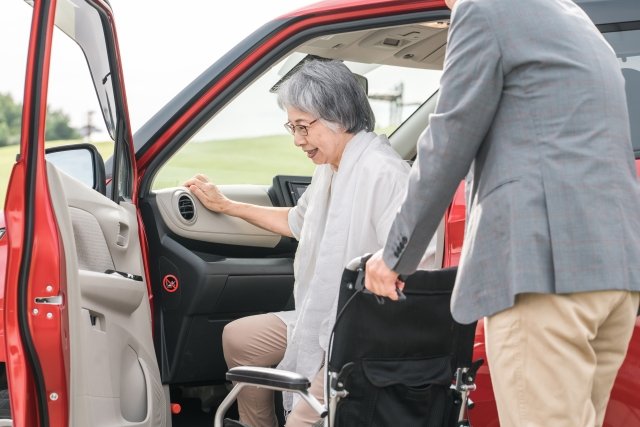
1. Typical Scenarios (If This Is You, You’re Not Alone)
If you are reading this, chances are one of these situations feels familiar:
Your parent lives alone in Japan while children live overseas
One spouse remains in Japan, while family support is abroad
A sudden hospitalization reveals how little information you actually have
Early signs of dementia were noticed too late—or dismissed
An emergency phone call arrives and you have no idea who to contact locally
None of these scenarios are rare. Japan is one of the most aged societies in the world, and international families are increasingly common. What makes these situations difficult is not aging itself, but distance,language, and system gaps.
The good news: there are things you can do, even from overseas.
The hard truth: there are also clear limits.
2. What You Can Do from Overseas – Building a Care Framework
This is where planning—early or late—makes a meaningful difference.
A key contact may be:
A brother, sister, or relative in Japan
A trusted friend or neighbor
A professional (care manager, social worker, or support service)
Hospitals, ward offices, and care providers strongly prefer a Japan-based contact. Even if you are deeply involved, being overseas limits what institutions can share or accept from you.
Family is often the first choice—but family relationships can also become a source of conflict. In some cases, relying on a professional is actually easier and more sustainable than depending on goodwill alone.
Use ward offices and community support centers
Every municipality in Japan operates community-based support centers (地域包括支援センター) for seniors and their families.
These centers can:
Advise on care options
Coordinate services
Help navigate benefits and procedures
They are typically Japanese-only, but they are extremely valuable intermediaries—especially if you have someone locally who can communicate with them.
Language Barriers (and Workarounds)
For overseas families with limited Japanese ability, language is often the biggest source of stress.
In some areas—especially parts of Tokyo such as Minato Ward—municipalities offer:
Interpretation services
Multilingual materials
Staff experienced in supporting foreign residents
Even where formal support is limited:
Translation tools can be used for written communication
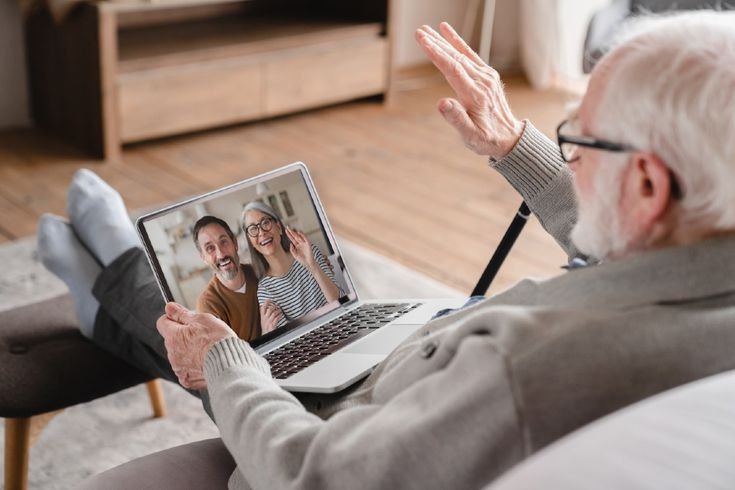
Ask whether phone or on-line participation is possible
In some cases, a short temporary visit to Japan may be the most efficient solution
Japan’s system is gradually adapting to support diverse residents. The key is not handling everything alone—use consultation desks at municipalities office early.
Care Managers (ケアマネジャー) Are a Critical Hub
Japan’s long-term care system is built around care managers, and they are often the most underutilized resource by overseas families.
A care manager:
Coordinates services
Understands care levels (要介護度)
Communicates with providers
Explains options in practical terms
Most importantly, has regular, close contact with the senior
They cannot replace family decision-making, but they can act as your eyes and ears on the ground.
If your family member already uses long-term care insurance, a care manager is likely already assigned. If not, contacting a community support center before a crisis is strongly recommended.
Communicating with Hospitals (Understanding the Limits)
Hospitals in Japan prioritize patient privacy. This means:
They may not freely share details with overseas family
Consent usually must be given by the patient
That said, there are workarounds:
Request scheduled updates through the local contact or care manager
Use written summaries or consent forms where possible
Remote participation (when possible)
While Japan is still conservative about remote decision-making, phone calls and on-line meetings are increasingly accepted, especially after COVID.
Remote participation works best when:
A local contact is present
Expectations are managed
You are not trying to replace on-site decision-makers
Think of yourself as supporting, not substituting, the local process.
3. Senior Care Options: Home, Facility, or Hospital
Where a senior lives has a major impact on care needs and family burden.
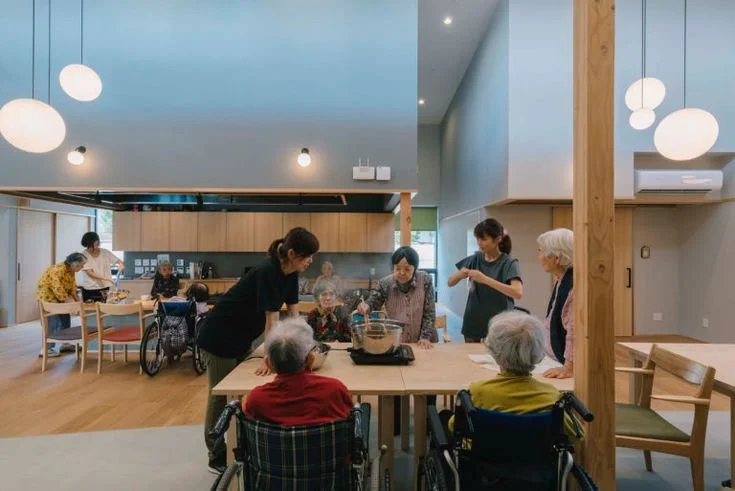
Facilities (Assisted Living / Nursing Homes)
Facilities vary widely, from assisted living to full nursing care. Choosing one requires balancing:
The senior’s wishes
Level of care needed
Financial reality
For families overseas, facilities often provide peace of mind, as many daily concerns are handled on site.
Quick Facility Checklist (For Families Living Overseas)
Ask your local contact to check:
☐ Occupancy level: Are many rooms vacant?
☐ Facility condition: Are common areas and rooms well maintained?
☐ Staff stability: Do staff appear experienced and consistent, or frequently changing?
☐ Care quality: Are residents clean, engaged, and appropriately supported?
☐ Management stability: Has the operator changed recently? Any signs of service reduction?
☐ Communication: Is the facility responsive and transparent with family inquiries?
Rule of thumb:
If staffing feels unstable or the facility appears poorly maintained, dig deeper before committing.
Related blog -> Senior Care in Japan: Costs, Choices, and What Foreigners Should Know
Hospitals
Hospitals are not living spaces, but for seniors, hospitalization can happen suddenly and unpredictably. Maintain regular communication with care managers and be prepared for transitions.
Home Care
Home care requires the most coordination, but it is also the most common preference.
A care manager will create a care plan based on the senior’s wishes and condition. Common arrangements include:
Home helpers (frequency and duration)
Visiting nurses and doctors
Shopping and daily necessities support
Garbage management through local services
Transportation and accompaniment for hospital visits
Medication management
Cleaning, laundry, and bathing
Delivery meal services
Assistive equipment (care beds, handrails, walkers, toilets)
Fraud prevention measures (an increasing concern)
Higher-level care arrangements as needs increase
End-of-life preferences and decision-making authority
Care plans also incorporate the senior’s life history, hobbies, and habits, which can make a meaningful difference in quality of life.
The care manager monitors the care plan on a monthly basis and conducts a formal review with all involved parties, including family members, on a semiannual basis.
For families living overseas, using online meetings (video calls), maintaining close communication with the care manager, and participating remotely in care coordination meetings can be effective.
Related blog -> In-Home Care in Japan: From Critical Illness to Senior Support
Supplementary Care Option: Day Services / Day Rehabilitation
Day Care (Day Services / Day Rehabilitation)
Day care services are available to seniors who have received formal long-term care certification. Seniors attend a hospital or care facility during the day and return home in the evening.
These services typically include:
Rehabilitation led by licensed professionals such as physical or occupational therapists, based on a physician’s instructions
Meals and bathing support
Structured activities designed to maintain or improve physical and cognitive function
Day care programs are particularly well suited for seniors recovering after hospitalization, those aiming to maintain mobility, or individuals who benefit from medical and rehabilitation-focused support while continuing to live at home.

4. What You Cannot Do (Important Reality Check)
This section matters because false expectations lead to frustration.
You cannot sign everything remotely
Certain procedures—particularly those related to care placement, contracts, and medical decisions—often require:
Physical presence in Japan
A formally registered power of attorney
Or a locally appointed legal representative
Do not assume that email correspondence or scanned signatures will be accepted. Many institutions still require in-person verification.
You may not receive full medical information
Even if you are a spouse or child, privacy rules apply. Without explicit consent, hospitals may share only limited information. This can feel personal. It usually is not.
Emergency decisions are hard without local representation
In urgent situations, decisions may need to be made quickly. If no local representative exists, institutions may proceed conservatively—which is not always what the family would prefer.
Cultural Differences in Senior Care
Senior care practices in Japan may differ significantly from those in the country where you live. If you are in an international marriage, your spouse may also find Japan’s approach to elder care unfamiliar or difficult to understand.
Differences in expectations around financial support, how often family should return home, and what “good care” looks like can easily lead to tension. These issues do not arise only in international families—conflicts over senior care are common even within Japanese families. Recognizing these cultural and emotional differences early can help prevent misunderstandings and make difficult conversations more constructive.
Language barriers amplify stress
Even fluent Japanese speakers struggle in medical or care-related discussions. For non-Japanese speakers, misunderstandings multiply under pressure.
This is not a personal failing—it is a structural challenge.
5. The Role of Legal & Formal Arrangements (Think Early)
You do not need legal depth—but you do need awareness.
In Japan, medical decisions, care contracts, and financial access depend on formal legal authority. Being a spouse or child is often not enough.
Key risk areas include:
Who can sign care or facility contracts
Who can receive medical information or give consent
Who can access bank accounts and manage payments
Arrangements such as power of attorney and guardianship must be set up before decision-making capacity declines. After a crisis, options become limited and inflexible.
Hospitals, care providers, and ward offices also rely on formal contact lists. Ensure overseas family members are listed where possible, and that a clear Japan-based contact is identified.
Banking is especially rigid. Without preparation, accounts may be frozen and payments may stop—often without warning.
This article focuses on care planning.
A companion post, Japan Power of Attorney & Guardianship for Seniors: Overseas Families Need to Know Before a Crisis, will follow shortly and explains these legal frameworks in practical terms.
6. When to Consider Professional Help
If your parent chooses—or agrees—to live in a care facility, many daily concerns are handled within the facility. However, when seniors remain at home, seeking professional help is often a practical bridge across distance, language, and time zones.
Japan’s public long-term care system is comprehensive, but it is not designed to cover everything. In many cases, combining public services with private support leads to the most stable outcome.
You may want to consider professional help in the following areas.
Care Management and Coordination Services
Under Japan’s long-term care insurance system, a care manager (ケアマネジャー) is assigned once services begin. However, it is important to understand the limitations of this role.
Care managers generally do not handle:
Legal matters
Facility due diligence or comparisons
Special or non-standard requests
For overseas families, private care coordination services can complement the public system.
Examples include:
Japan Life Planning Association (Japanese only)
Services include facility placement support, safety check-ins, and assistance with wills and related planning.MBP Global – Relation Support (English available)
These services are particularly helpful when family members cannot visit Japan frequently.
Professional Helpers and Visiting Nurses
Helpers and visits by nurses or doctors are available under long-term care insurance. However, home care often requires additional support beyond what this insurance covers.
Key points to understand:
Helpers and nurses do not live with the senior under long-term care insurance
Public services have time and frequency limits
Private services can fill gaps, especially for overseas families
Examples:
L-Service – Private In-Home Senior Care and Support Services (Japanese Only)
R-Maid – Home Helper and Care Support Services
These services can support daily living, monitoring, and accompaniment beyond insurance-covered hours.
Meal Delivery Services
Meal delivery can significantly reduce daily stress and nutritional risk.
Examples:
Benesse Palette (Japan, limited regions)
Shokutakubin (Nationwide)
Nosh (Nationwide)
Many services allow family members overseas to manage subscriptions and payments.
Social Workers
Social workers connected to:
Hospitals
Municipal offices
Community support centers
…often play a critical coordination role, especially during hospitalization or discharge planning. They can help connect families to appropriate services and explain next steps.
They work in a wide range of settings, including hospitals, facilities for older adults and people with disabilities, child guidance centers, public welfare offices, schools, and community-based integrated support centers.
Legal Professionals (Limited Scope)
Lawyers or judicial scriveners may be needed for:
Power of attorney
Guardianship arrangements
Authority clarification
Legal support does not need to be broad to be useful. Even limited consultation can prevent serious problems later.
Monitoring and Safety Tools
Monitoring tools can provide reassurance for families living overseas by offering regular check-ins, alerts, or communication support.
Examples:
SECOM Home Security
Function: Home security system with emergency response, sensors, and 24/7 monitoring. Alerts are triggered if abnormalities are detected.ALSOK Home Monitoring
Function: Security and monitoring services for seniors living alone, including emergency alerts and safety confirmation.Kuroneko “Hello Light” Visit Plan
Function: Utility-usage–based monitoring and optional visit services. Alerts are sent if daily activity patterns change.MANOMA (Sony Smart Home Service)
Function: Smart home monitoring using cameras, sensors, and smartphone access. Families can check conditions remotely.RoBoHoN (Communication Robot)
Function: Voice-interactive robot that supports communication, reminders, and emotional engagement for seniors living alone.BOCCO emo (Communication Device)
Function: Simple communication device for messages, reminders, and light monitoring, designed for ease of use by seniors.
These tools range from full security systems to communication devices and light-touch in-home monitoring. Selection should be based on the senior’s comfort level, privacy preferences, and actual support needs.
✅NOTE:
Discount program for JAL domestic flights
It applies when close relatives (within second degree) travel home to provide care.
The care recipient must have official long-term care certification. Enrollment in the JAL Mileage Bank (JMB) is required.
Advance registration is also required. Supporting documents must be submitted, such as a long-term care insurance certificate and family registry records.
A Practical Reminder
Many families seek professional help only after exhaustion sets in. In practice, involving support earlier often:
Reduces total cost
Prevents crises
Lowers emotional strain
7. The Emotional Reality (Brief but Real)
Living overseas while a loved one ages in Japan brings:
Guilt for not being there
Anxiety over incomplete information
Decision fatigue across time zones
Cultural expectations around family responsibility
You do not need to solve these feelings to acknowledge them.
Distance does not equal neglect. Planning is a form of care.

8.Q&A
Q1: What if my parent refuses outside help or facility care?
A: This is very common. Many seniors prefer to remain at home for as long as possible. A care manager can gradually introduce services and adjust the care plan over time, which is often more effective than pushing for sudden changes. Early conversations—before a crisis—tend to work far better than discussions held during emergencies.
In practice, some seniors, particularly women, may also feel uncomfortable having unfamiliar helpers enter their home, which should be handled with sensitivity and patience.
Q2: What if my parent lives in a rural area?
A: Services may be more limited, but community support centers exist nationwide. In rural areas, coordination becomes even more important, and care managers often play a larger role in bridging gaps.
Q3: How do I know when it’s time to consider a facility?
A: Common signs include frequent falls, medication mismanagement, isolation, caregiver burnout, or repeated hospitalizations. A care manager can help assess timing objectively and present options without forcing an immediate decision.
Q4: How often should I communicate with the care manager if I live overseas?
A: There is no single right frequency, but a regular rhythm helps. Some overseas families check in monthly by email and participate in formal care plan reviews (semi-annually) by phone or on-line. During periods of change—such as hospitalization or rapid decline—more frequent contact is advisable.
Q5: Can I manage payments and contracts from overseas?
A: Sometimes, but not always. While utilities or meal services may be manageable remotely, banking transactions and care contracts often require local handling or formal authority. Without a power of attorney or trusted local support, administrative tasks can quickly become a bottleneck.
Q6: What should I do if siblings or relatives in Japan disagree with care decisions?
A: Conflicts are common. Involving a neutral third party, such as a care manager or social worker, can help ground discussions in objective needs rather than emotions. Clarifying roles and decision-making authority early reduces misunderstandings later.
Q7: Is it realistic to handle everything remotely without ever returning to Japan?
A: In the short term, yes—but over the long term, it becomes difficult. Most families eventually find that periodic visits, even brief ones, are necessary for major decisions such as facility selection, contract signing, or crisis response.
Q8: What is the biggest mistake overseas families make in senior care planning?
A: Waiting until a crisis forces action. Emergency decisions are almost always more stressful, more expensive, and more restrictive. Even small steps taken early—such as identifying contacts, understanding available services, or having basic conversations—can significantly improve outcomes.
9.Wrap up
Caring for seniors in Japan from overseas is not easy—but it is possible.
The key is to understand what can be done remotely, what requires local presence, and where support structures already exist. Early preparation does not eliminate hard moments, but it dramatically improves how those moments unfold.
If this is your situation, you are not alone. And even from far away, there are steps you can take.
If this post resonated with you or helped clarify your next steps, please share your thoughts or experiences in the comments below—what challenges have you faced, or what worked well for you?
Also, if you know a friend, colleague, sibling, or family member dealing with similar issues (aging parents in Japan while living abroad), please share this link with them.
Reference:
Research Paper on Long-Distance Family Caregiving in Japan (Japanese, PDF)
See also:
Pain Control in Japan: Why So Little Medication, and What’s Changing
