

Furusato Nozei: Not a Tax Trick, but a Very Japanese Way of Redistributing Taxes
For years, I thought I understood Furusato Nozei. I assumed it was a tax-saving scheme.
Only recently did I realize that this understanding was fundamentally wrong.
Furusato Nozei is not a tax reduction tool. It is not about paying less tax. And once you see that clearly, the system becomes far more interesting—not financially, but culturally.
This blog is therefore not about how to optimize Furusato Nozei. It is about why this policy exists, what problem it is trying to solve, and what it reveals about Japan’s relationship with tax, place, and reciprocity.
This blog covers:
1. What Problem Was Furusato Nozei Trying to Solve?
2. Why Furusato Nozei Is Not “Tax Saving”
3. Why the Word “Deduction” Causes So Much Confusion
4. So Where Does the Money Actually Go?
5. Why Would a Government Allow This?
6. The Cultural Meaning of “Furusato”
7. Reciprocity and the Role of “Thank-You Gifts”
8. A Market Mechanism Inside a Public Policy
9. Who Can Actually Use Furusato Nozei?
10. Minimal Practical Guidance
11. Q&A
12. Wrap Up

1. What Problem Was Furusato Nozei Trying to Solve?
At its core, Furusato Nozei is a response to a structural issue that Japan has faced for decades:
Population concentration in large cities
Declining and aging rural communities
Weak fiscal autonomy of local municipalities
Japan is a highly centralized country fiscally. While people live and work in cities, tax revenue is largely pooled and redistributed through national systems. Rural towns, especially those experiencing depopulation, often struggle to maintain services, infrastructure, and local industries.
Traditional policy responses—subsidies, grants, and central redistribution—exist everywhere in the world. Japan already had them.
Furusato Nozei was an experiment:
What if individuals could decide where part of their tax money goes?
Not by voting.
Not by lobbying.
But by choosing a municipality directly.
2. Why Furusato Nozei Is Not “Tax Saving”
This is where my misunderstanding begins.
Under Furusato Nozei, you send money to a municipality of your choice. Later, that amount—minus a fixed personal cost (JPY2,000)—is not collected again as tax by the national or local government.
Nothing is “returned.”
Nothing is “refunded” in the everyday sense.
What actually happens is simpler and more precise:
You prepay part of the tax you were going to owe anyway, but you choose the recipient.
From a household cash-flow perspective, this feels like paying first and being adjusted later. From a policy perspective, it is a reassignment of tax destination, not a reduction of tax burden.
This is why calling Furusato Nozei “tax saving” is misleading. Your total tax liability does not meaningfully decrease. What changes is where that tax ends up.
3. Why the Word “Deduction” Causes So Much Confusion
Legally, Furusato Nozei is handled as a donation deduction. That is a tax law classification, not a description of economic reality.
In everyday language, “deduction” suggests:
Something was overpaid
Money will come back
You somehow avoided tax
But with Furusato Nozei:
The money never goes to the national treasury
It never goes to your home municipality
There is nothing to “return”
Instead, the government simply does not collect that portion of tax later.
This mismatch between legal terminology and lived experience is why even Japanese explanations often feel contradictory—and why foreign residents, in particular, struggle with it.
4. So Where Does the Money Actually Go?
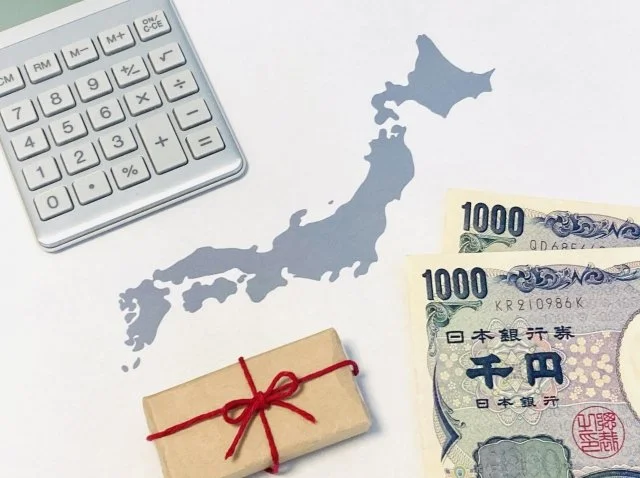
All of it goes to the municipality you chose.
That includes the portion that would otherwise have been paid as:
Resident tax to your city of residence
Income tax to the national government
In that sense, Furusato Nozei does something politically unusual:
It allows taxpayers to redirect tax revenue away from their own municipality.
This is not a side effect. It is the point.
Urban areas lose some tax revenue. Rural municipalities gain it. The national government permits this intentionally, as a form of decentralized redistribution.
Seen this way, Furusato Nozei is not generous, clever, or sneaky.
It is a controlled policy choice.
5. Why Would a Government Allow This?
From an international perspective, this is striking.
Most countries redistribute tax revenue centrally. Individuals rarely get to decide where their tax goes. Allowing people to shift revenue away from their own city would be politically explosive in many places.
Why does it work in Japan?
Three reasons matter.
A.Centralized control with carefully bounded decentralization
Japan remains fiscally centralized. The national government sets the rules, defines the limits, and regulates the entire framework. Furusato Nozei does not represent a loss of control; rather, it is a narrow, tightly managed exception within a highly controlled system.
Taxpayers are not free to redirect unlimited amounts, nor can municipalities operate outside national guidelines. This balance—limited choice within strict boundaries—makes the system politically manageable.
In other words, decentralization exists, but only where the center explicitly allows it.
B.Acceptance of redistribution framed as policy, not punishment
Furusato Nozei openly shifts revenue from urban areas to rural ones. This is not hidden, accidental, or unintended. It is a policy choice designed to address regional imbalance.
Crucially, this redistribution is framed not as a penalty on cities, but as a form of collective responsibility for national sustainability. Urban taxpayers are given agency rather than being positioned as passive sources of transfer.
Because participation is voluntary and individualized, the political friction is softened.
C.High institutional trust and compliance
Perhaps most importantly, the system relies on a high degree of trust:
Trust that taxpayers will comply
Trust that municipalities will follow rules
Trust that the national government will maintain fairness
In societies where tax systems are viewed primarily with suspicion, such a model would be difficult to sustain. In Japan, however, tax compliance is generally high, and institutional legitimacy remains comparatively strong.
This trust allows the government to experiment with policy tools that would be considered risky elsewhere.

6. The Cultural Meaning of “Furusato”
The word furusato is often translated as “hometown,” but that translation is incomplete.
Furusato implies:
The place where you were born or raised, and sometimes where your parents still live
An emotional origin, not merely a current residence
A place you continue to feel connected to, even after leaving
A sense of moral connection rather than a legal obligation
In many cultures, tax follows residence. In Japan, belonging and responsibility can extend beyond where you currently live.
Furusato Nozei institutionalizes this way of thinking. Even if you live in Tokyo, you can choose to support the town or village that raised you—or a place you feel connected to, such as an area affected by a natural disaster or long-term depopulation.
7. Reciprocity and the Role of “Thank-You Gifts”
Another feature that feels strange to outsiders is the existence of thank-you gifts.
From a strict tax perspective, this looks problematic. Tax payments are supposed to be neutral and non-transactional.
But Japan has a long tradition of:
Gift exchange
Acknowledgment of contribution
Tangible expressions of gratitude
The gifts are not the purpose of the policy; they are the social lubricant that makes participation feel meaningful rather than abstract.
Importantly:
Gifts are regulated
Their value is capped
They are not meant to equal the payment
They are symbolic reinforcement of reciprocity, not compensation.
8. A Market Mechanism Inside a Public Policy
Furusato Nozei also introduces competition where it normally does not exist.
Municipalities:
Promote their local products
Tell their stories
Compete for attention
This is unusual for tax systems, but very Japanese in execution: orderly, regulated, and bounded.
The thank-you-gift includes food, local experiences, travel-related offerings, traditional crafts, or household goods. These gifts are not meant to function as commercial transactions, but as a structured incentive within the policy framework.
For municipalities, this mechanism can translate into increased fiscal support while also helping to sustain local industries and regional identity.
9. Who Can Actually Use Furusato Nozei?
Very simply:
You must be a tax resident of Japan
You must pay resident tax
You must have sufficient taxable income
Nationality does not matter. Income source does not matter. What matters is tax liability.
This means:
Some pensioners can use it
Some foreign residents cannot
Some people technically can, but gain little practical benefit
Furusato Nozei is therefore not a universal benefit. It is conditional, depending on one’s tax situation.
10. Minimal Practical Guidance
To avoid misunderstanding, only three practical rules really matter:
You are not reducing tax, only redirecting it
There is a limit based on your tax situation
Anything beyond that limit is a real donation
If these three points are clear, the rest is largely administrative. You simply need to report your Furusato Nozei contributions either through your employer’s year-end tax adjustment or by filing a tax return. Many people use a single online platform (One point service) to manage this process, but the reporting obligation remains the same.
A Personal Observation: Donation Culture and Furusato Nozei
When I lived in the United States, I was struck by how deeply embedded the culture of donation was in everyday life. Organizations like Goodwill were everywhere, and donating clothes or household items was part of normal routines.
During the Christmas season, I saw colleagues at work participate in programs where employees selected children’s wish lists and purchased gifts for them. What left the strongest impression on me was how early this mindset was introduced. Children were encouraged to divide their allowances into separate jars—for saving, investing, and donating. Giving was treated as a natural responsibility, not an exceptional act.
In recent years, I have noticed that Japan has also been developing more visible channels for individual support. Crowdfunding and donation platforms are becoming increasingly common. Seen in this context, Furusato Nozei can be understood as another entry point—distinctly Japanese in design—through which individuals can participate in supporting regions and communities they care about.

11. Q&A
Q1: Can you explain the general scheme of Furusato Nozei?
A1: Furusato Nozei allows taxpayers in Japan to redirect part of the tax they would normally pay to their local or national government and instead contribute that amount to a municipality of their choice.
In practice, individuals select a municipality and product/service, then make a payment through an online platform. The money goes directly to that municipality. In the following tax cycle, the national government and the taxpayer’s municipality of residence do not collect that portion of tax, within a defined limit.
Many people use online platforms such as Satofull, Furusato Choice, or Furunavi to manage selection, payment, and documentation, but proper tax reporting is still required.
Q2: Is Furusato Nozei a tax-saving scheme?
A2: No. Furusato Nozei does not reduce your total tax liability. It allows you to redirect part of the tax you were already going to pay. The system is better understood as a tax reallocation mechanism, not a tax reduction tool.
Q3: Why do municipalities offer thank-you gifts?
A3: Thank-you gifts serve as a regulated incentive and cultural acknowledgment, not as compensation. They reflect Japan’s tradition of reciprocity and help support local industries. The gifts are capped in value and are not intended to mirror the amount contributed.
Q4: What happens if you contribute more than your limit?
A4: Any amount contributed beyond your personal limit becomes a true donation, with no tax adjustment. In other words, that portion is treated as voluntary support for the municipality.
Q5: What is the One-Stop Special System?
A5:The One-Stop Special System is an administrative simplification designed mainly for salaried employees in Japan who would otherwise not need to file an annual tax return.
Under this system, eligible taxpayers can complete the necessary procedures for Furusato Nozei without filing a tax return, by submitting a designated application form to the municipalities they support. The tax adjustment is then reflected through resident tax in the following year.
It is important to note that the One-Stop Special System does not change the substance of Furusato Nozei. It does not alter eligibility, limits, or tax treatment. It only simplifies reporting procedures.
If a taxpayer later files a tax return for other reasons (such as medical expense deductions), the One-Stop Special System cannot be used, and Furusato Nozei must be reported through the tax return instead.
14.Wrap up - So Is Furusato Nozei “Worth It”? It is up to you !
That may not be a right question.
The right question is:
Do you want to participate in a system that lets you consciously decide where part of your tax supports society?
For some people, the answer is yes.
For others, it is not worth the effort.
Both choices are rational.
But it does make Japan—and its approach to public finance—far more interesting.
Referrals:
Japanese Government Overview: How the Furusato Nozei System Works
See also:
Japan Tax Returns for Employees in 2026: Filing Rules, Refunds, and Deadlines
How to Read a Japanese Payslip & withholding tax slip - What Foreign Workers Need To Know
